Back to the shelf

057

Dhara – Audit Atlas

An audit atlas for business software: ten walkable rivers, no database, built beside the system, never inside it.

Building · Started August 2026 · System · Vibe-Coded

That's the whole thing.

The site's sound is off. The narration still plays.

This reading didn't load. The transcript is below.

Read the transcript

Dhara means the current. August twenty twenty-six, a conversation with the leadership of a pharma company. The concept was approved the next day.

I am building an audit atlas for the company's business software, beside it, never inside it. You enter it rather than look at it.

Process flows are rivers in the mountains. Master records are snow on the peaks. Transactions are the flowing water. Approvals are gates that hold the current. Reports are the sea. The audit log is the riverbed that remembers.

An AI pipeline reads the codebase, extracts a verified graph of how everything flows. Ten walkable rivers. No database.

An early version is deployed. An auditor should watch how things move. That is why this exists. Follow along.

Narrated in my own cloned voice, generated with ElevenLabs v4.
Dhara – Audit Atlas
No. 057

Dhara means the current. It was born in August 2026 from a conversation with a pharma company’s leadership, and the concept was approved the next day. Vibe-coded with AI. It’s an audit atlas for the company’s business software, built beside it, never inside it.

The metaphor came early and held: process flows are rivers in the mountains. Master records are snow on the peaks. Transactions are the flowing water. Approvals are gates that hold the current. Reports are the sea. The audit log is the riverbed that remembers everything that passed over it.

Dhara is a living, explorable environment: one valley per flow, entered rather than viewed from outside. An AI pipeline reads the software’s codebase and extracts a certified graph of how everything moves. Ten walkable rivers so far. Deployed with no database.

The instruments I’m building: an atlas of every module, a player that follows one real document through its approvals, an X-ray of any record, a rights lens, an audit trail explorer, and an AI search where language goes in and a picture comes out. Every view exports to a dated evidence binder for the auditor.

An auditor should be able to watch how things actually move through a system. That’s what Dhara is for. An early version is deployed, and the link is on this page.

The making

  • Laravel
  • PHP
  • Next.js
  • React
  • TypeScript

01 · The problem

Before it existed

What hurt

A system audit of a large business application meant sampling screens and reports. Nobody could watch how a document, a rupee or a person actually moves through it.

Who uses it

  • System auditor
  • Company leadership and finance head
  • Programming and QA team who keep the map true
  • 32commits in ten days
  • 10walkable rivers
  • 69programs seated on those rivers
  • 486programs read from the codebase

02 · The flow

7 steps, in the order they happen

  1. 01 / 07

    Arrive at the range

    You
    Opens the front door
    It answers
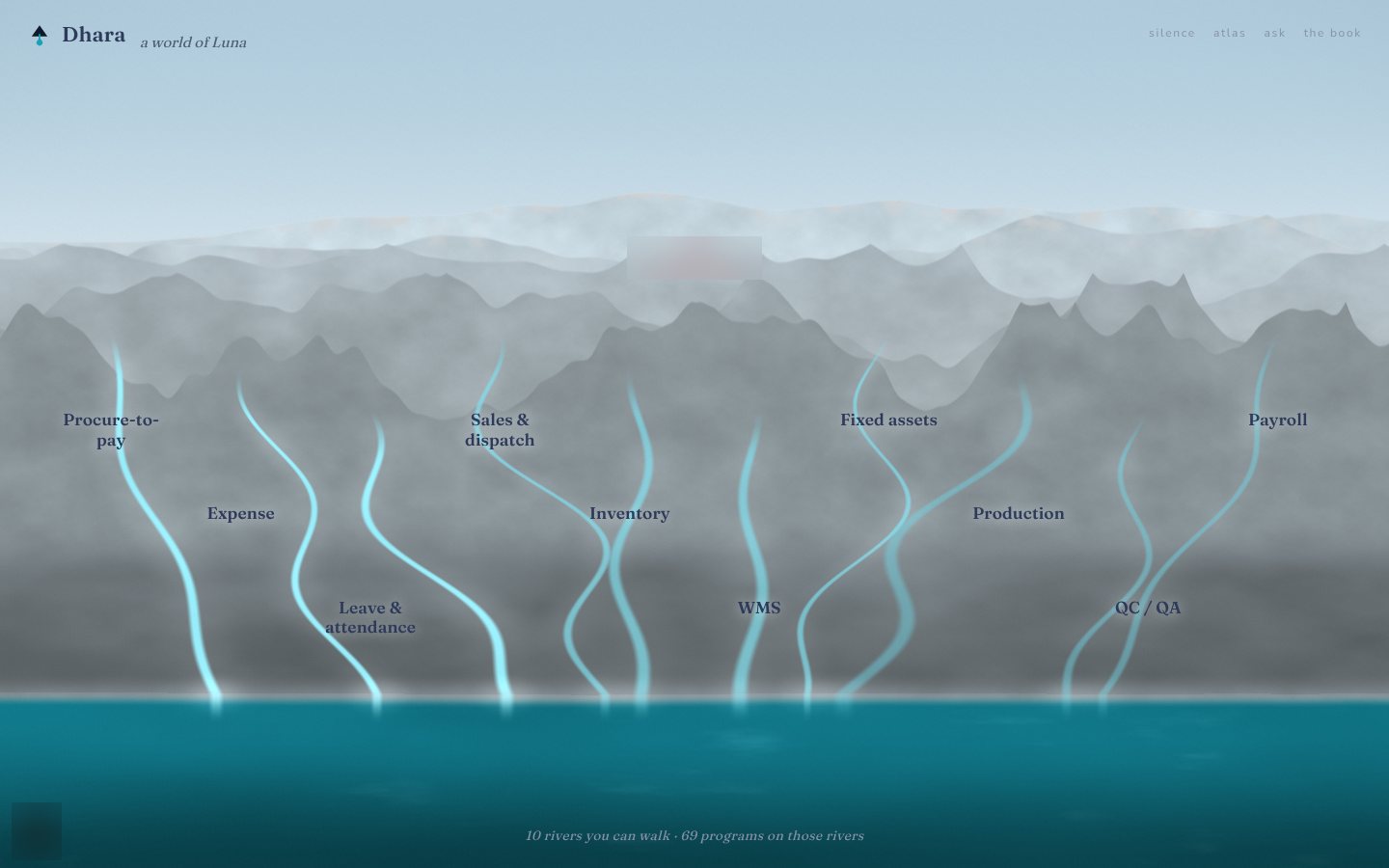
    Draws ten rivers in the mountains, each named for a process
    A misty mountain range with ten glowing rivers labelled Procure-to-pay, Expense, Inventory and others
  2. 02 / 07

    Enter a river

    You
    Picks Procure-to-pay
    It answers
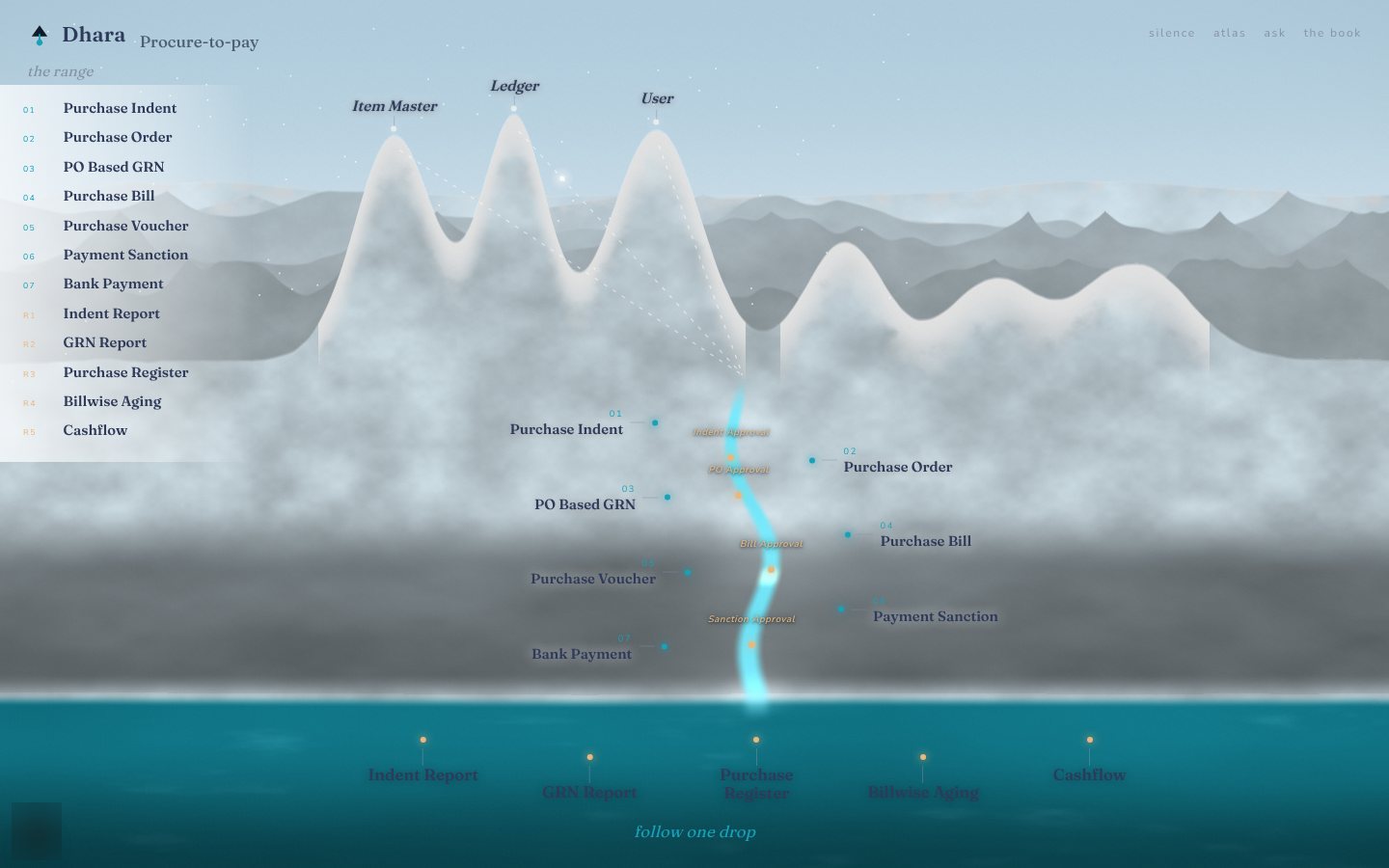
    Descends into one valley: masters on the peaks, steps along the water
    A valley with three snowy peaks, a river of numbered steps and reports pooled in the sea below
  3. 03 / 07

    Open a station

    You
    Selects Purchase Order
    It answers
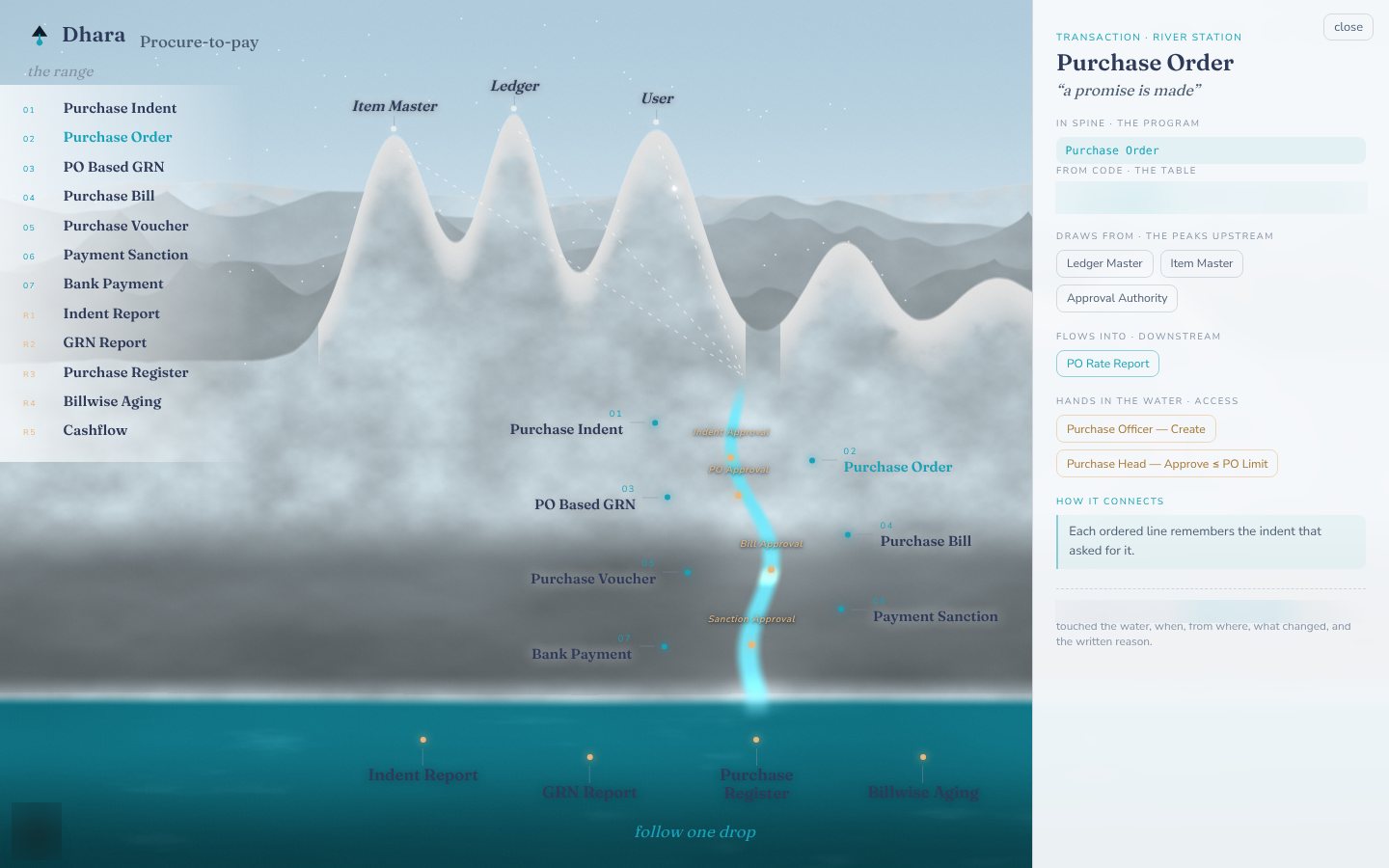
    Names the program, what feeds it and who may act on it
    The valley with a side panel describing the Purchase Order station and the roles that act on it
  4. 04 / 07

    Meet a gate

    You
    Selects an approval gate
    It answers
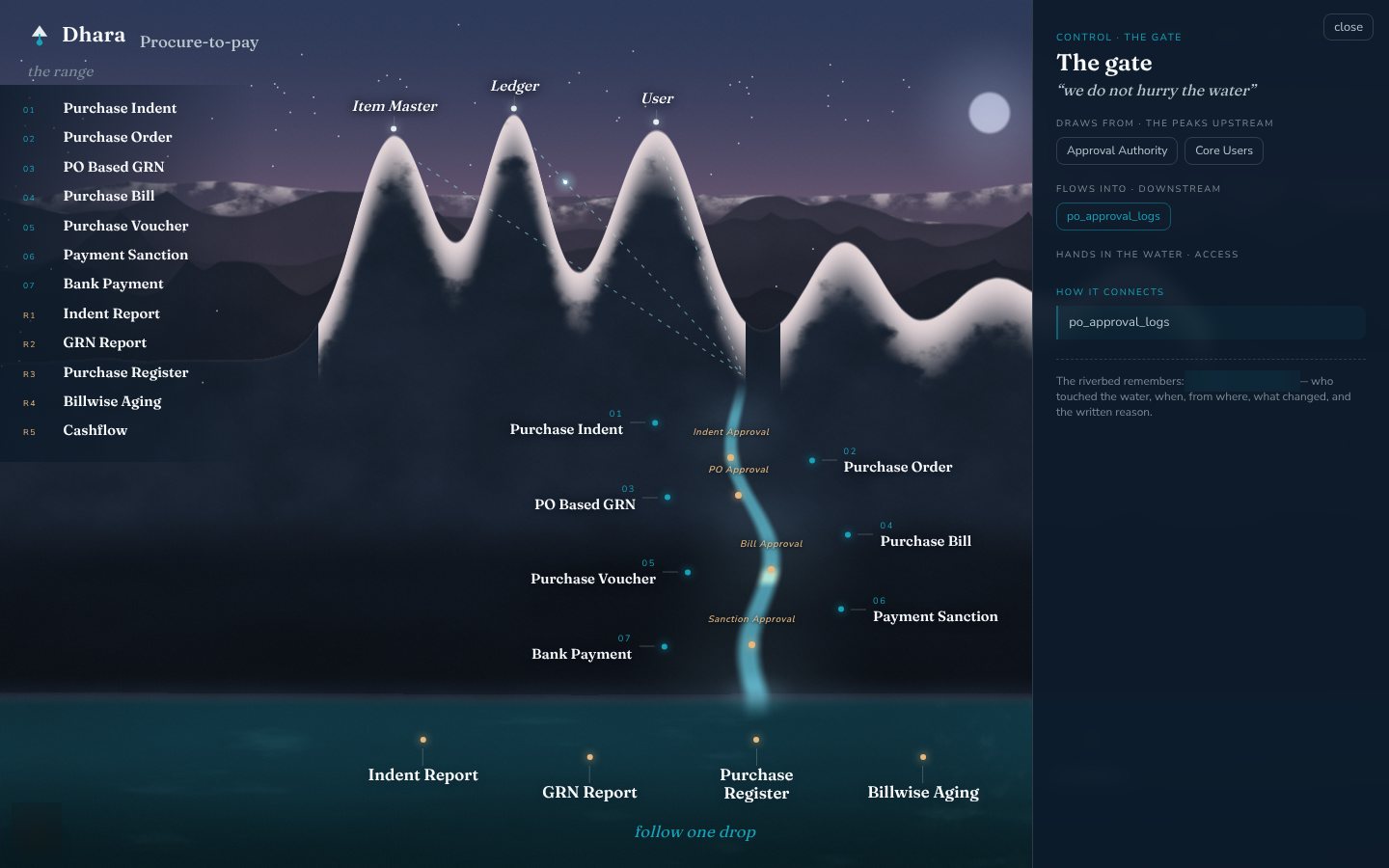
    Shows what the gate draws on and where it leads
    The valley at dusk with a side panel titled The gate and the line we do not hurry the water
  5. 05 / 07

    Ask in plain words

    You
    Picks a question
    It answers
    Redraws the answer as a path through the valley
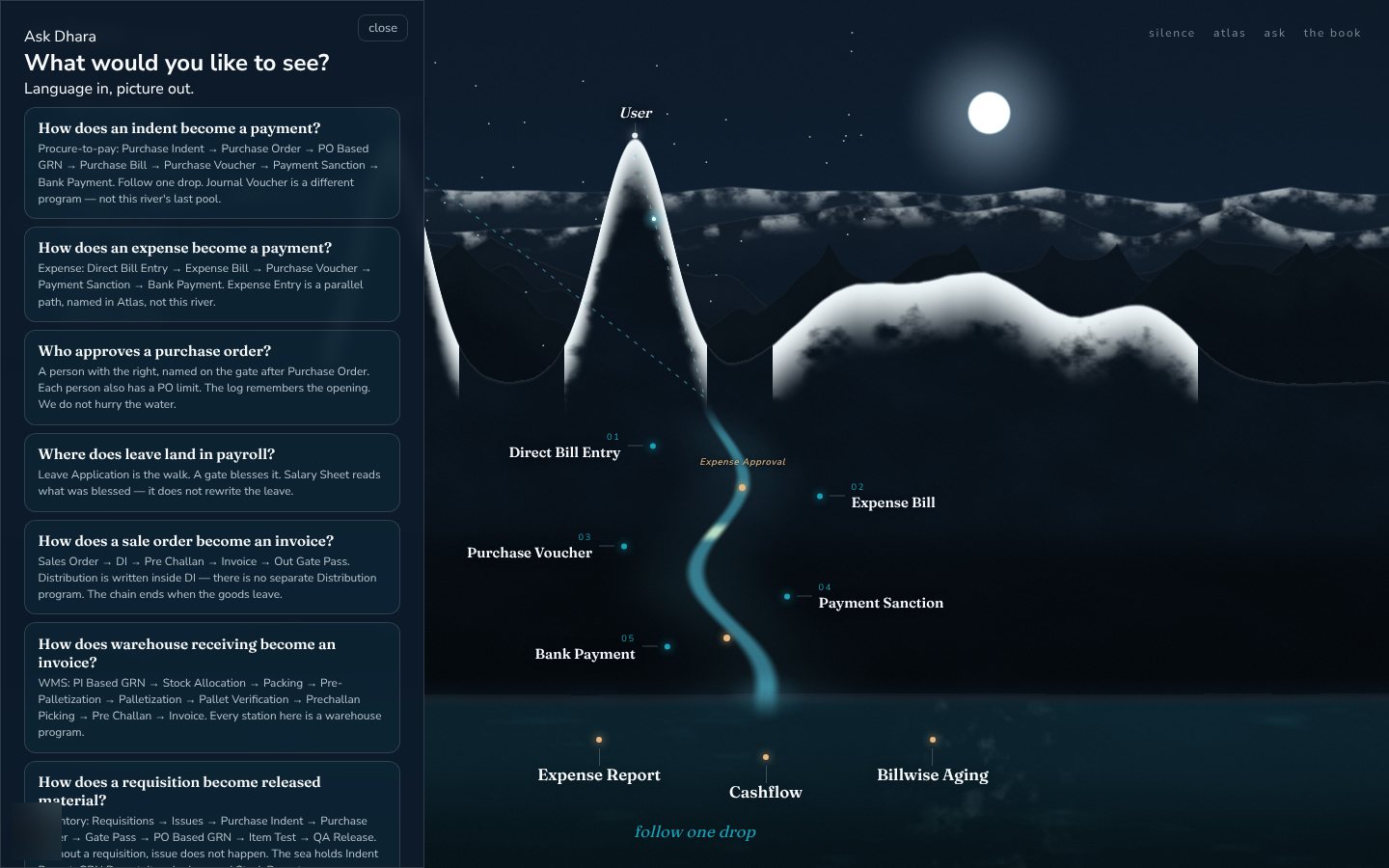
    A list of questions such as How does an expense become a payment beside a night valley
  6. 06 / 07

    Read the atlas

    You
    Opens the atlas
    It answers
    Lists every program, on a river or named only, so gaps show
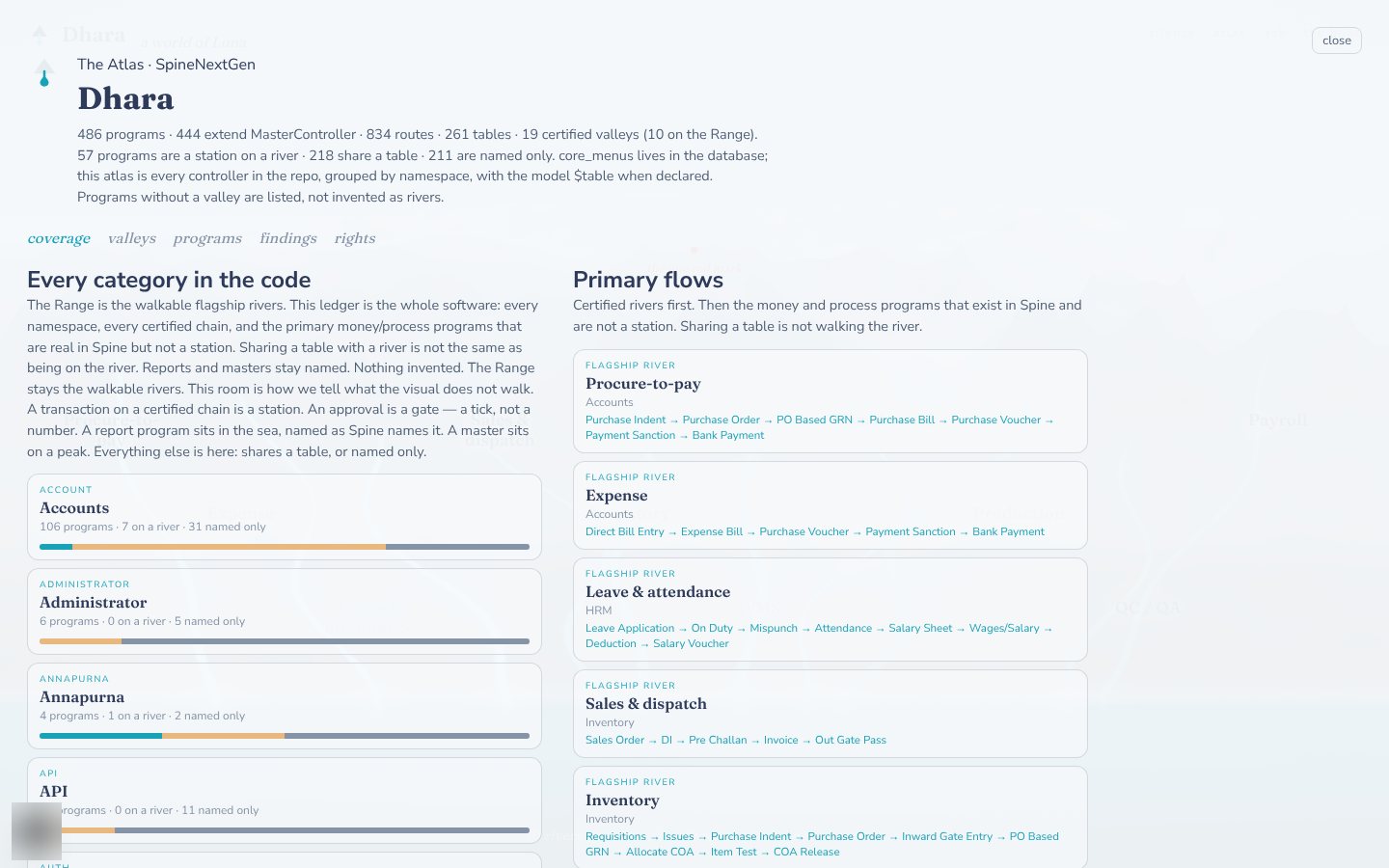
    A coverage ledger with program counts per category and the flagship rivers listed with their steps
  7. 07 / 07

    Print the binder

    You
    Opens the book view
    It answers
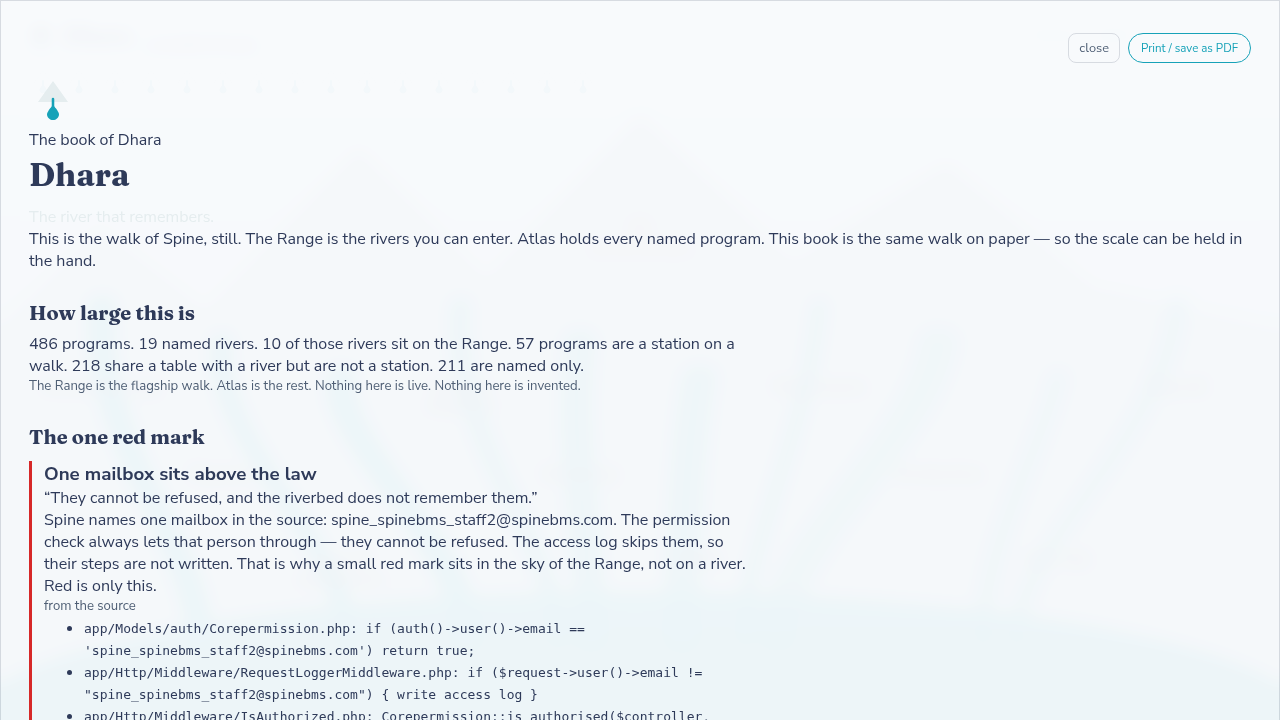
    Lays the walk out as a dated evidence binder for the auditor

03 · What was special

What it stands on

  1. A map no one draws by hand

    A pipeline reads the codebase and refuses any table it cannot verify. The rivers are regenerated, never sketched.

  2. Read-only by rule

    No writes to the business system and no database of its own. The certified graphs are the only data.

  3. Gaps stay visible

    The atlas lists every program that is not yet a river, so what the visual cannot show is on the page.

Built beside the system, never inside it, from certified code.

Making-Of

An audit you walk through, where the log is the riverbed that remembers.

A conversation with the pharma company’s leadership; the first commit followed on 21 August

  1. The world before

    The company’s business software holds hundreds of screens and tables. An audit could sample them, but not watch how work flows through them.

  2. One day

    20 August 2026. A conversation with the leadership; the concept was approved the next day, and the first commit landed that day.

  3. Because of that

    1. 21 August 2026. The world engine, the first valleys and the front range were built and hosted as a static site.
    2. 22 August 2026. A mark, an atlas of every program and a circadian sound bed were added; the habitat was signed off.
    3. 22 August 2026. A first QA round closed twelve findings.
    4. 25 August 2026. QA found programs missing; they were walked, and every river gained a connected story.
    5. 29 August 2026. A programming team member added a workflow-creation and QA-approval process.
    6. 31 August 2026. A gap walk was handed to the team to seat the remaining programs.
  4. Until finally

    Ten rivers can be walked, with an atlas that names every program that is not yet one.

  5. Since then

    The team closes the remaining program gaps one by one, each through QA before it is published.

The evidence Process, hands, and artifacts

Process

  1. Concept

    An environment you enter, not a diagram you look at

  2. Engine

    Draw only from graphs extracted from the code; no database

  3. Identity

    A mark generated once: snow on a peak becomes a drop

  4. Atlas

    Every program listed, on a river or named only

  5. QA

    Walk every program QA found missing; tell one story per river

  6. Workflow

    Programming to QA preview to approval to publication

  7. Handover

    The team takes the gap walk, with the method written down

Hands

Akshansh

  • Concept and the river metaphor
  • Brand law and the sign-off of the habitat
  • Review and merge of the pull requests

Agents

  • CursorBuilt the world engine, valleys and atlas
  • Claude CodeWalked missing programs and wrote the connected stories