Back to the shelf

049

Granth

The electronic document is the master and print is just a convenience.

Building · Started July 2026 · System · Notion-First

That's the whole thing.

The site's sound is off. The narration still plays.

This reading didn't load. The transcript is below.

Read the transcript

Granth means the bound book. In the pharma company I work with, one fifteen-page procedure with three signatories demands forty-five wet signatures, for a single version of one document. That number stopped me.

I started building Granth in July twenty twenty-six. It makes the electronic document the real master: authored, reviewed, signed, and read digitally. Print becomes a convenience, never the authority. It has a paged web editor, version history, e-signatures, and an immutable audit trail. Controlled copies render identically, every time.

I write the documentation before I write the code. Granth is the next chapter of Hyperlink, an earlier project of mine. It is a work in progress, and I am glad you found it.

Narrated in my own cloned voice, generated with ElevenLabs v4.
Granth
No. 049

Granth means the bound book.

In the pharma company I work with, thousands of controlled documents live on paper. Standard operating procedures, their enclosures, every revision: written in Word, printed, signed by hand. One fifteen-page procedure with three signatories needs forty-five wet signatures and about as many handwritten dates. That’s for one version of one document.

I started Granth in July 2026 to change that. It is the next chapter of an earlier project of mine called Hyperlink. The build philosophy is the same: documentation first, code second.

Granth makes the electronic document the master. Authors write in a paged web editor where the structure is enforced: they write only the body, the system owns the frame. Documents are authored, reviewed, signed, issued, and read digitally. Print becomes a convenience, never the master.

The system covers the full lifecycle from draft to obsolete: structured authoring with real-time collaboration and comments, full version history, configurable signature chains, an immutable audit trail, deterministic rendering of controlled copies, and periodic review scheduling.

A live work-in-progress version is running. I am still building.

The making

  • TypeScript
  • React
  • Next.js
  • Node.js
  • PostgreSQL
  • Ed25519

01 · The problem

Before it existed

What hurt

A controlled procedure lived on paper. One fifteen-page SOP with three signatories needed forty-five wet signatures for a single version, and nobody could say which copy was current.

Who uses it

  • QA
  • Document authors
  • Approvers
  • Auditors
  • Floor readers
  • 264commits
  • 27database migrations
  • 45 to 3wet signatures to signing acts

02 · The flow

8 steps, in the order they happen

  1. 01 / 08

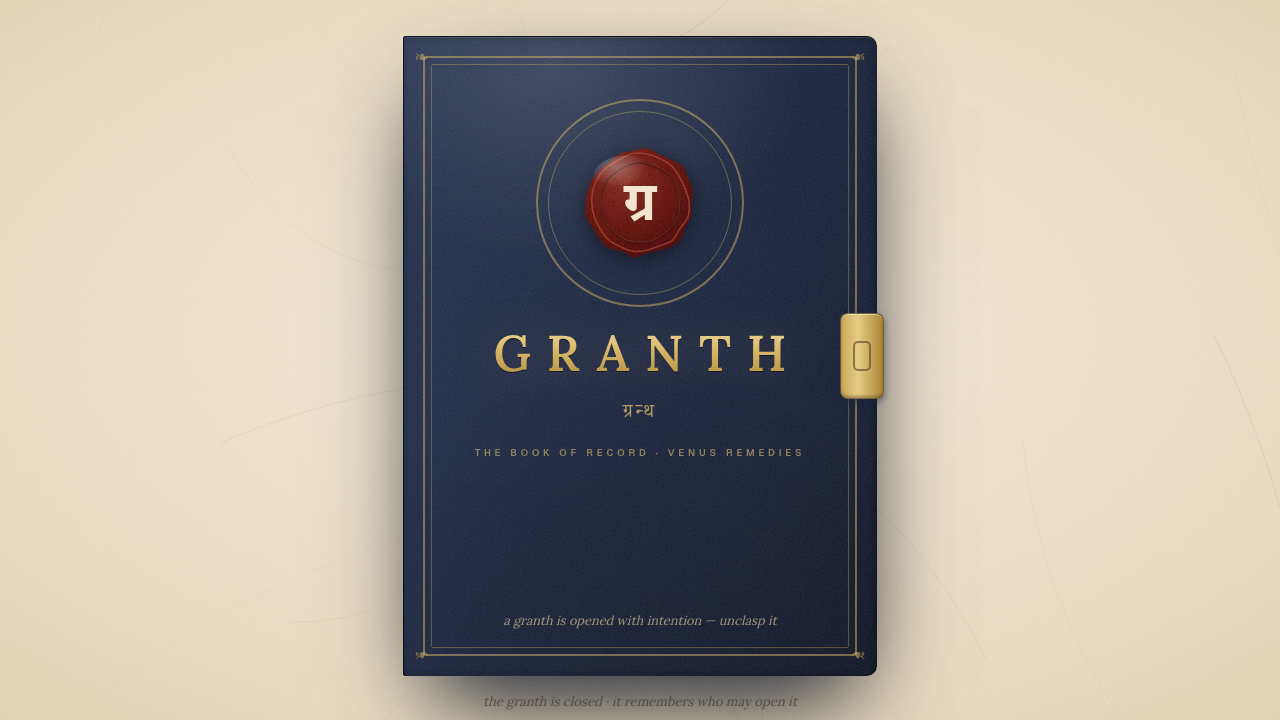
    Open the book

    You
    Unclasps the closed Granth
    It answers
    Opens only for people who may enter, then lands on the library
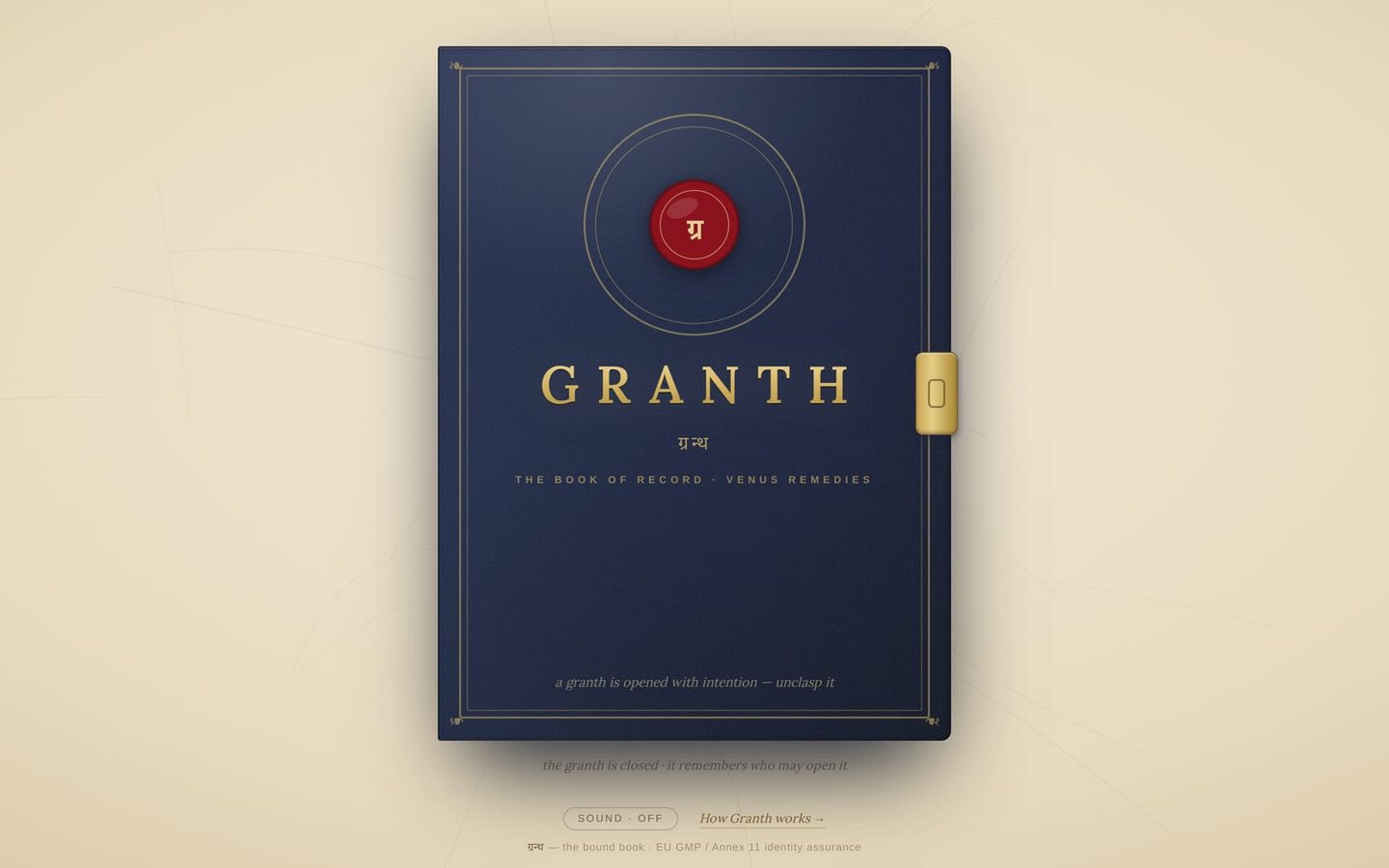
    A closed navy book with a red seal and the word Granth on its cover
  2. 02 / 08

    Walk the shelves

    You
    Opens a department shelf
    It answers
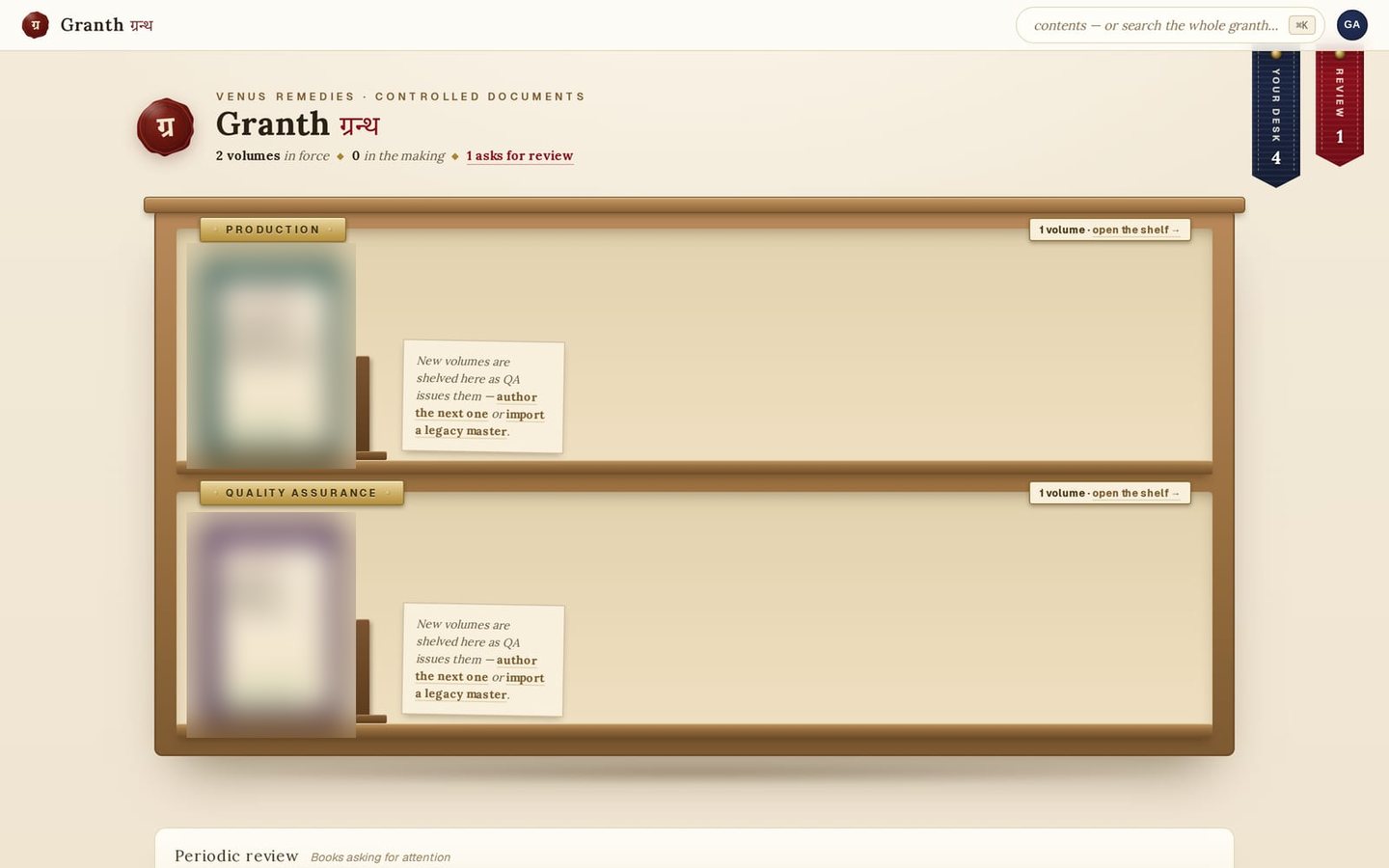
    Shows each volume as a book, with its state on the cover and what needs attention
    Wooden department shelves with blurred book covers and two ribbons for desk and review
  3. 03 / 08

    Rule a fresh leaf

    You
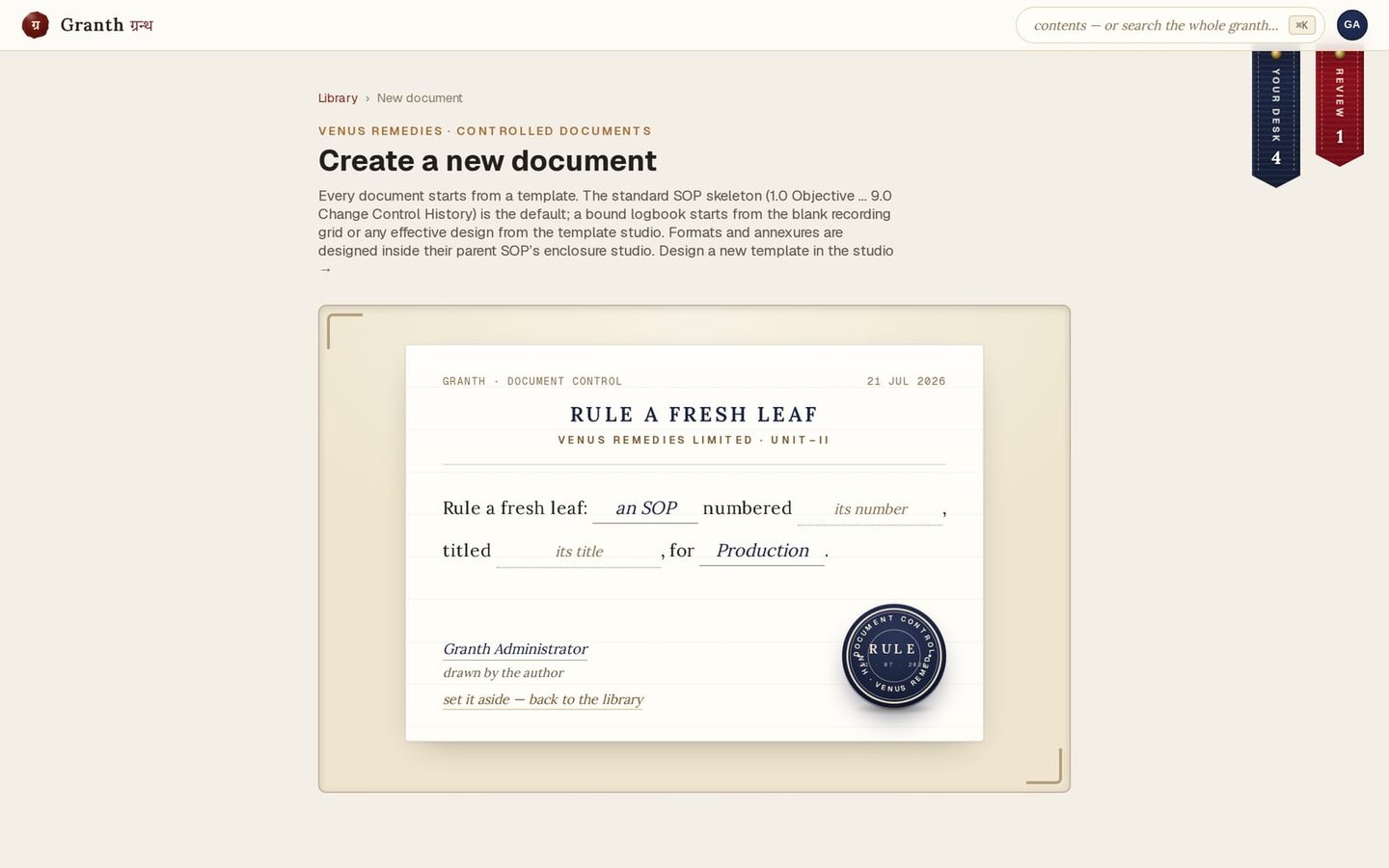
    Fills a sentence: a document, its number, its title
    It answers
    Starts a draft from a controlled template, with the frame owned by the system
    A form written as a sentence with fillable blanks and a navy seal
  4. 04 / 08

    Design a template

    You
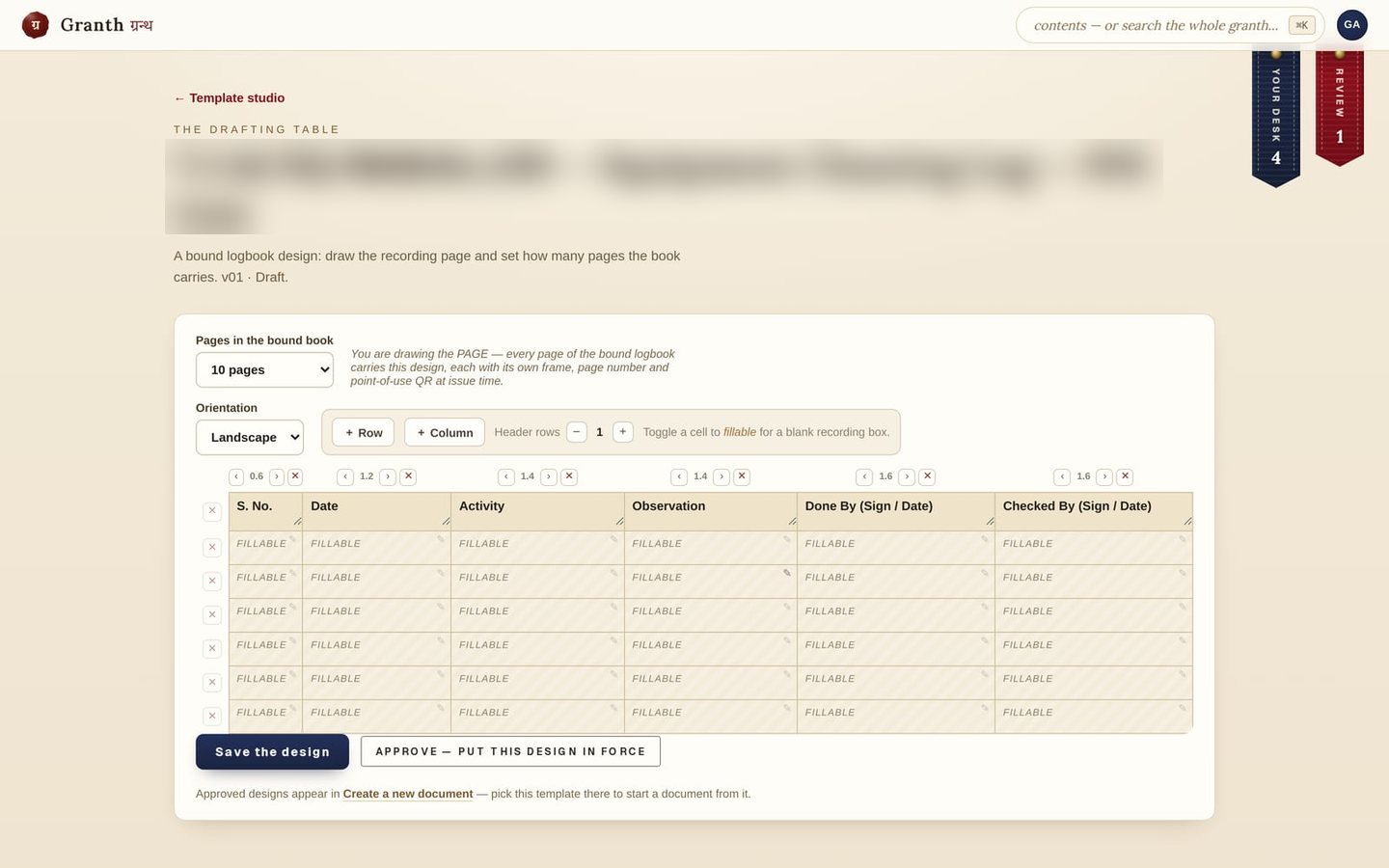
    Draws the page of a bound logbook
    It answers
    Keeps the design as a versioned, approved document of its own
    A template canvas with a table of fillable cells and a save button
  5. 05 / 08

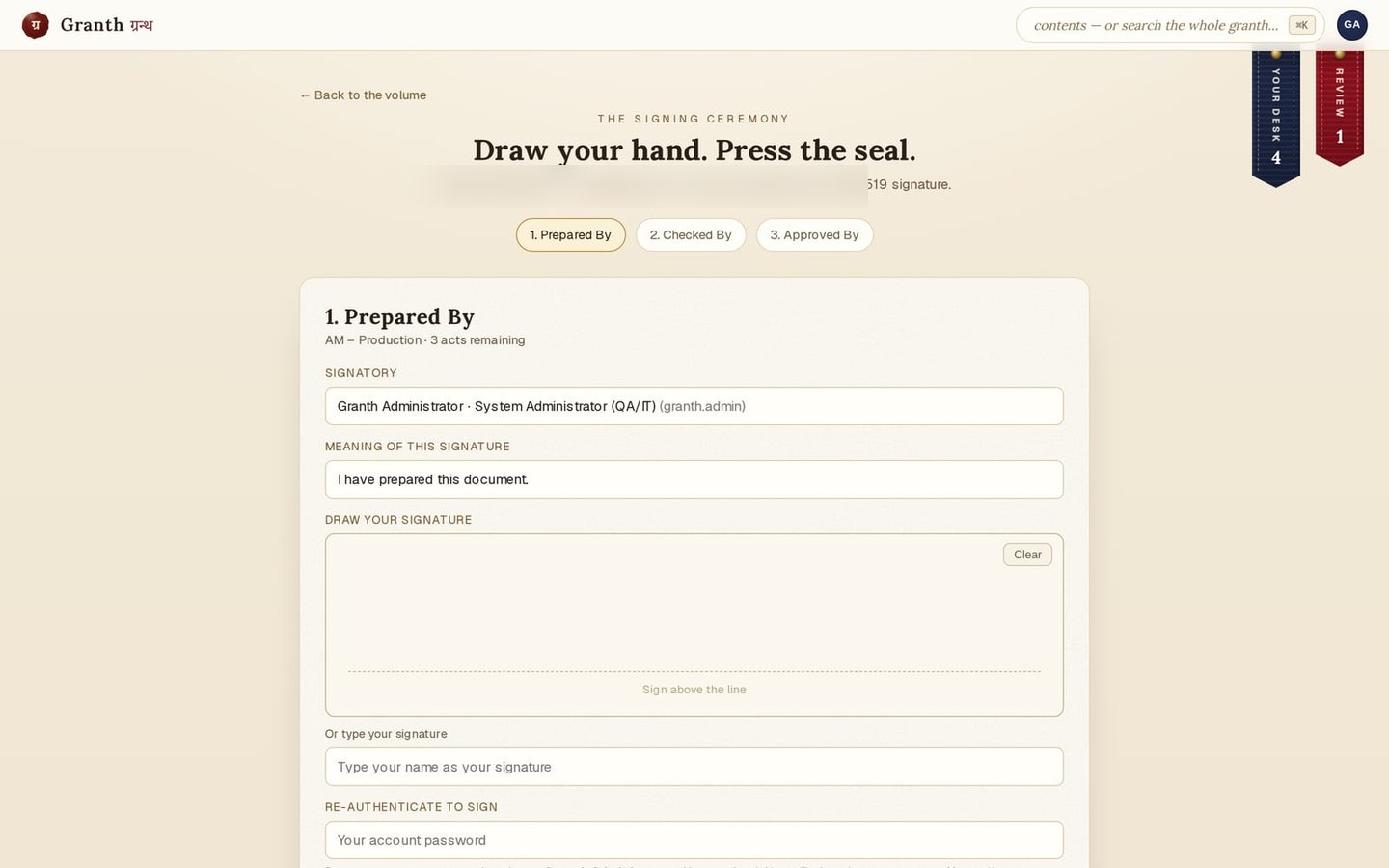
    Draw your hand, press the seal

    You
    Draws a signature once and re-enters a password
    It answers
    Seals it with an Ed25519 signature and renders it on every page
    The signing ceremony with a signature box and a password field
  6. 06 / 08

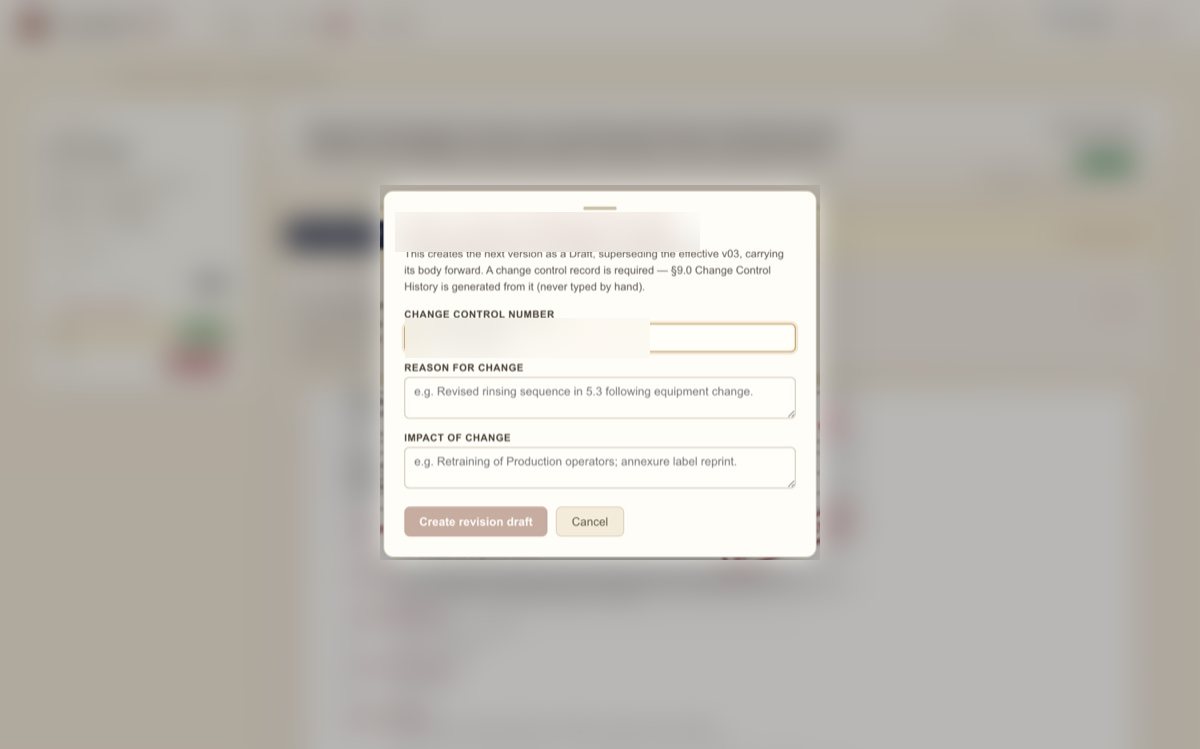
    Revise with a reason

    You
    Starts a revision and states the change and its impact
    It answers
    Creates the next draft, supersedes the effective version and writes the change history
    A dialog asking for a change control number, a reason and an impact
  7. 07 / 08

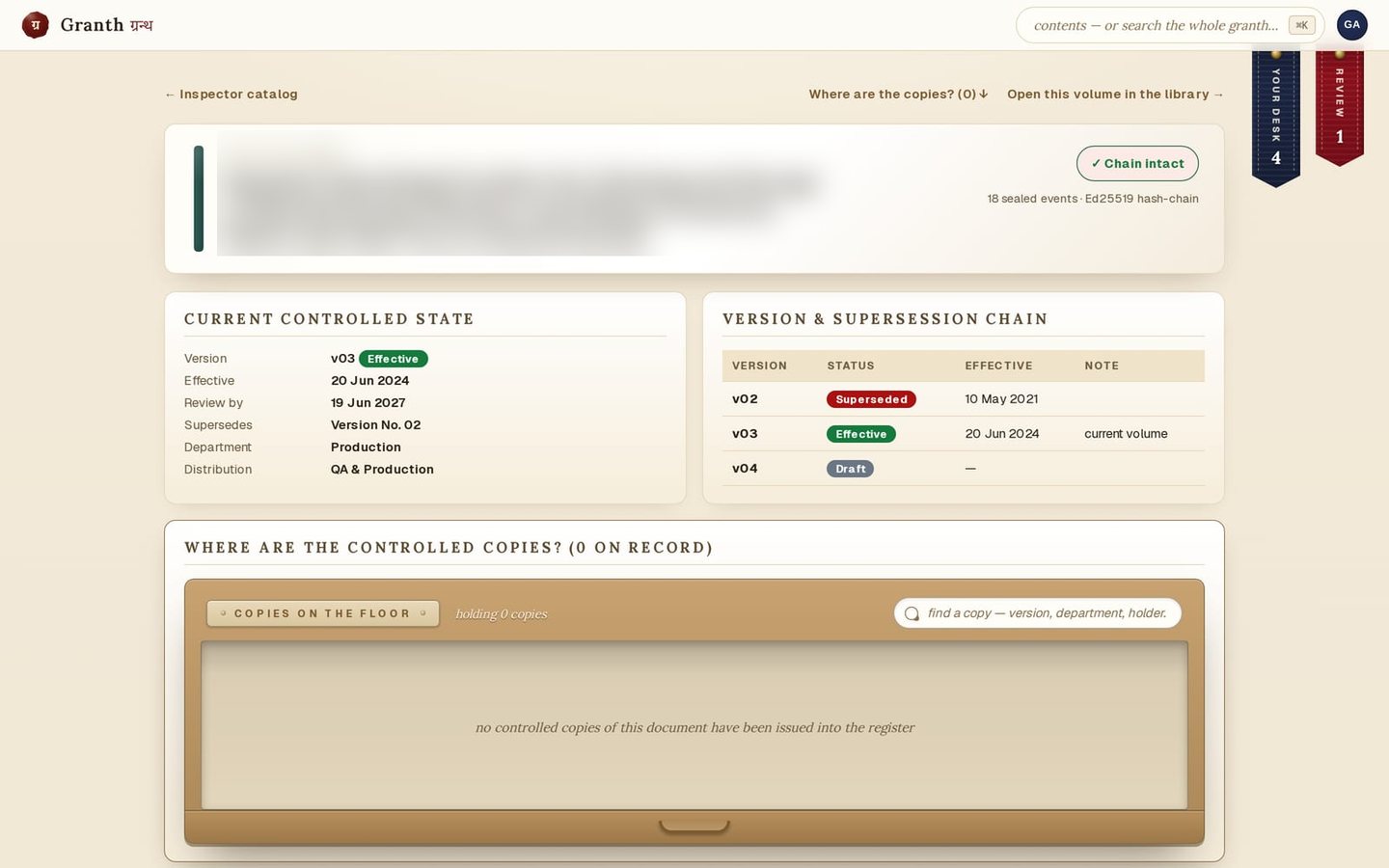
    Read the audit chain

    You
    Opens the audit view for a volume
    It answers
    Shows the version chain and a hash-chained trail marked intact
    An audit view with a chain intact badge and a version and supersession table
  8. 08 / 08

    Issue a controlled copy

    You
    A reader files a requisition at the counter
    It answers
    QA reviews, issues and numbers the copy in a hash-chained register

03 · What was special

What it stands on

  1. A library, not a dashboard

    Volumes on department shelves, books asking for attention when review is due, and approval as a ceremony.

  2. The editor is a preview

    Authors write structure; a deterministic render makes the controlled copy. The frame, stamps and signature grid are code.

  3. Blanks, never filled records

    Granth keeps the controlled master and its versions. The executed record stays with the application that used the blank.

The electronic document is the master. Print is a convenience.

Making-Of

Forty-five signatures for one version of one procedure. Granth turned them into three acts.

The Notion hub spec and the first commit, the same day

  1. The world before

    The pharma company I work with kept its controlled procedures as paper masters: written in Word, printed, signed by hand on every page. A fifteen-page SOP with three signatories meant forty-five wet signatures for one version.

  2. One day

    5 July 2026. The spec was locked in Notion: structured authoring in an editor of its own, deterministic rendering for controlled copies, and a library rather than a dashboard. The first commit landed that same day.

  3. Because of that

    1. The signing ceremony and a legacy Word import arrived in the first week (5 to 9 July).
    2. The whole app moved to a warm daylight palette, because the editing surface is a white page (6 July).
    3. A composed sound score and a narrative arc for entering the book were added (10 and 12 July).
    4. Copy requests, a QA counter and a hash-chained copy register followed (13 July).
    5. A controlled-format law was written: digital execution changes custody, not control (3 August).
    6. A written brand system gave every surface one grammar (22 August).
  4. Until finally

    Granth is live on Railway and still in build. The latest commit, on 8 October 2026, gave QA at the second unit typed copy counts and print-all.

  5. Since then

    It is a document system, not a training system: acknowledgement lives here, training records never will.

The evidence Process, hands, and artifacts

Process

  1. Origin

    Structured authoring, deterministic render, a library not a dashboard

  2. Ceremony

    Sign once, seal on every page

  3. Daylight

    Light palette first; the editor is a white page

  4. Import

    Legacy Word masters arrive as reviewable drafts

  5. Sound

    A composed score and a cinematic arc for opening the book

  6. Copies

    Requisition, QA counter and a hash-chained register

  7. Law

    Format masters stay controlled; executed data stays with its application

  8. Brand

    One written identity across every surface

  9. Second unit

    QA copy counts and print-all for Unit II

Hands

Akshansh

  • The spec, the locked decisions and the project laws
  • Design direction: a library, a ceremony, reverence with play
  • Review of every order the agents built

Agents

  • Claude CodePrimary builder, working order by order from the Notion Build Log
  • CursorExecuted briefs, including the early import and deploy work
  • ElevenLabsSound vocabulary for the score