Back to the shelf

045

Kura

Compliance is just the floor. Kura is the sanctuary built on top.

Building · Started June 2026 · System · Notion-First

That's the whole thing.

The site's sound is off. The narration still plays.

This reading didn't load. The transcript is below.

Read the transcript

Kura is Japanese for storehouse, the storehouse of precious things.

The pharma company I work with tracked every retention sample in paper logbooks. About two hundred of them. I built Kura to replace that: role-based access, e-signatures, an immutable audit trail, a lifecycle for every sample.

Compliant underneath. Compliance is just the floor. Above that, a Garden grows a bloom for every batch in safekeeping. Below, a walkable Cellar maps one to one to the real room's bins. The data becomes a place you inhabit: a sanctuary worth tending.

I started in June twenty twenty-six, documentation first. That documentation hub became the model for my whole product catalog. Kura is still building, and it's already in use.

Narrated in my own cloned voice, generated with ElevenLabs v4.
Kura
No. 045

Kura is Japanese for storehouse, the storehouse of precious things.

The pharma company I work with keeps control samples, also called retention samples: physical samples set aside from each batch. They lived in about two hundred paper logbooks. Kura replaces those.

Role-based access for keepers, reviewers, and admins. E-signatures. An immutable audit trail. A lifecycle for every sample, from safekeeping to expiring soon to due for retirement. The compliance layer is solid.

The idea I started with was something else. What if the data became a place you inhabit? Above ground, a Garden grows a bloom for every batch in safekeeping, batches grouped in family groves. Below, a walkable Cellar maps one-to-one to the real room’s bins. Compliance underneath. A sanctuary worth tending on top.

I started in June 2026, documentation first, then code. The documentation hub I built for Kura became the model my entire product catalog is now built from. Kura is my flagship: the one that set the pattern.

A live version is in use. I am still building.

The making

  • Next.js
  • TypeScript
  • Tailwind CSS
  • Prisma
  • PostgreSQL
  • Vitest
  • Three.js

01 · The problem

Before it existed

What hurt

Control samples lived in about two hundred paper logbooks. Nothing showed which sample was close to expiry, where it sat, or who had touched it.

Who uses it

  • QC keepers
  • QC reviewers
  • Administrators
  • 242commits
  • 111commits in the first three days
  • ~200paper logbooks replaced
  • 29validation screenshots

02 · The flow

7 steps, in the order they happen

  1. 01 / 07

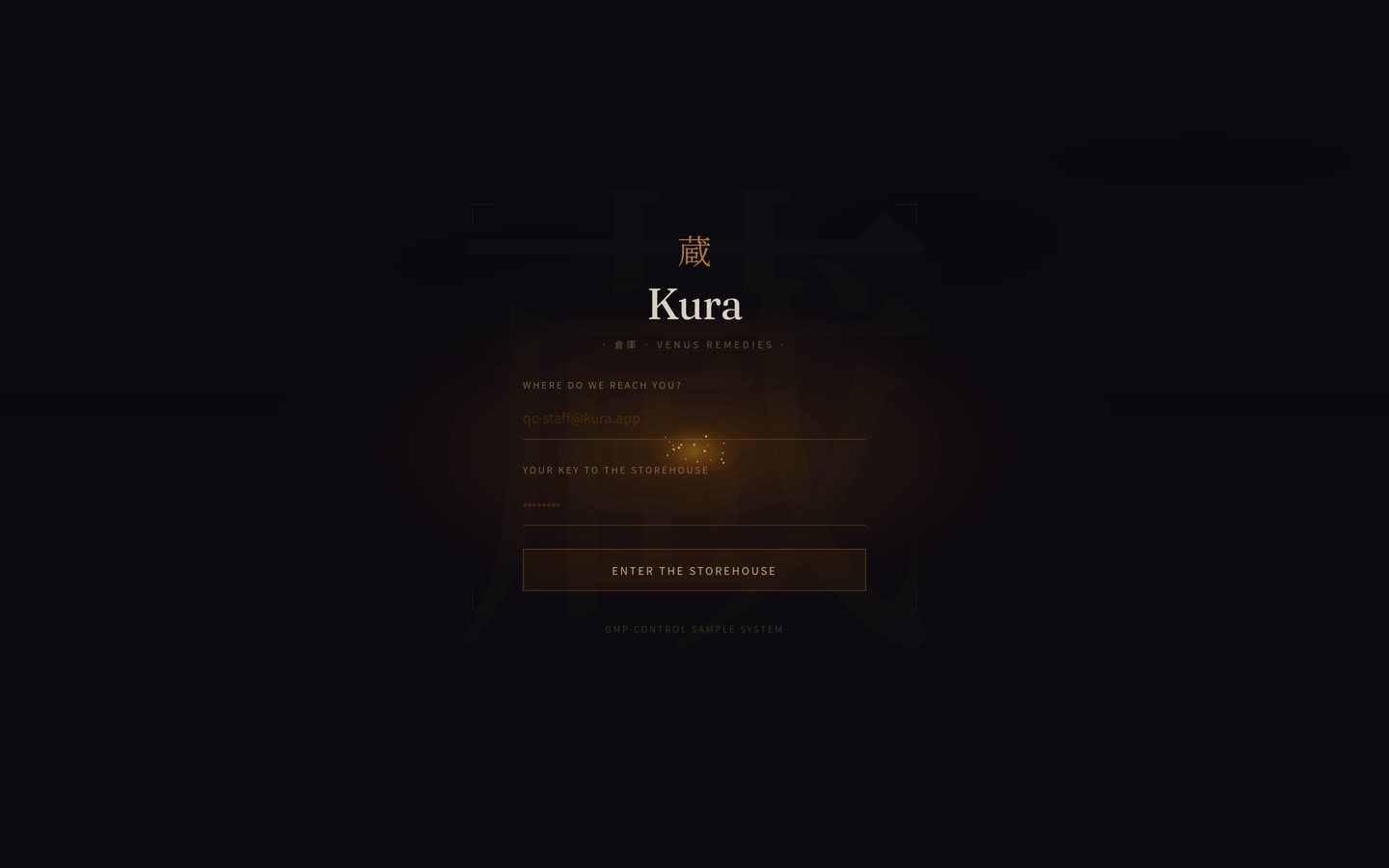
    Enter the storehouse

    You
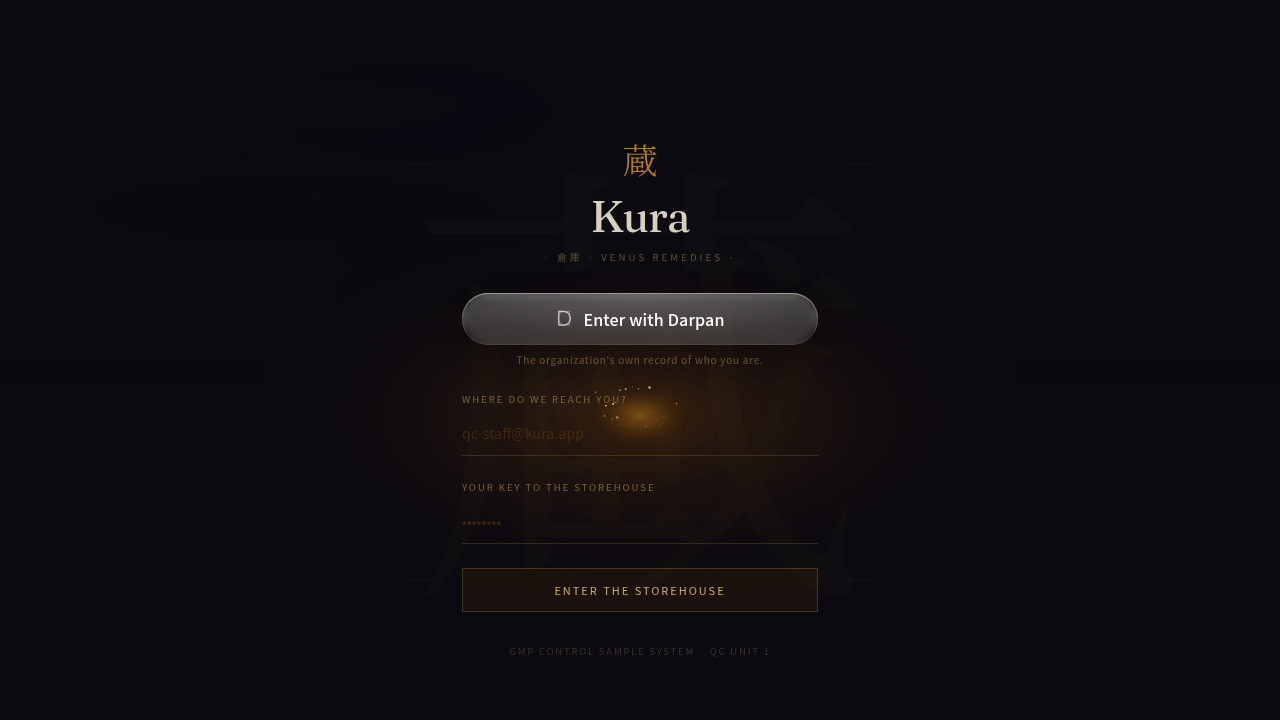
    Signs in with a work account
    It answers
    Gives each person one role: keeper, reviewer or admin
    A dark login screen with the Kura character and an Enter the storehouse button
  2. 02 / 07

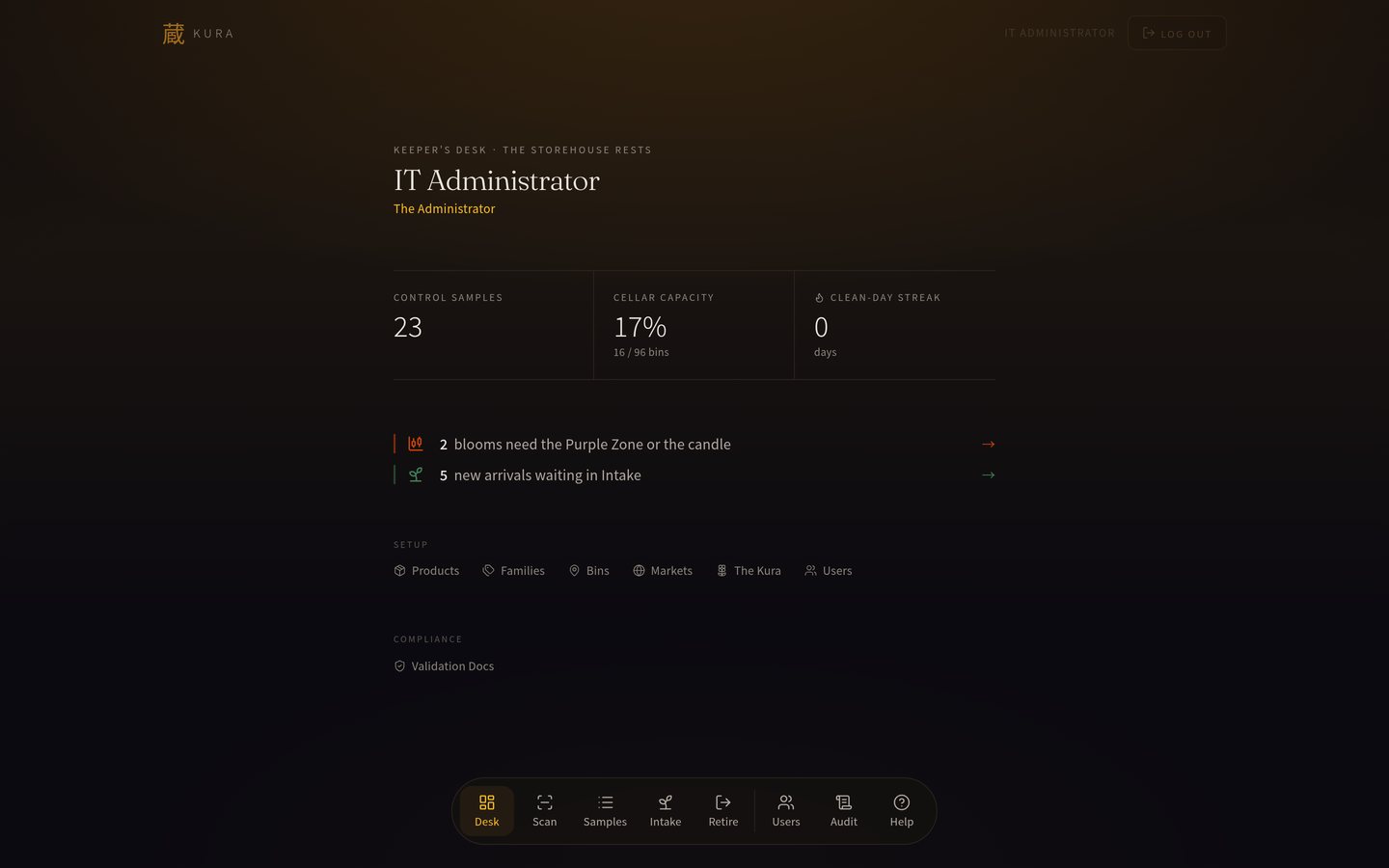
    Read the keeper’s desk

    You
    Opens the desk
    It answers
    Shows sample count, cellar capacity and what needs attention today
    The desk with 23 control samples, 17 per cent cellar capacity and two attention lines
  3. 03 / 07

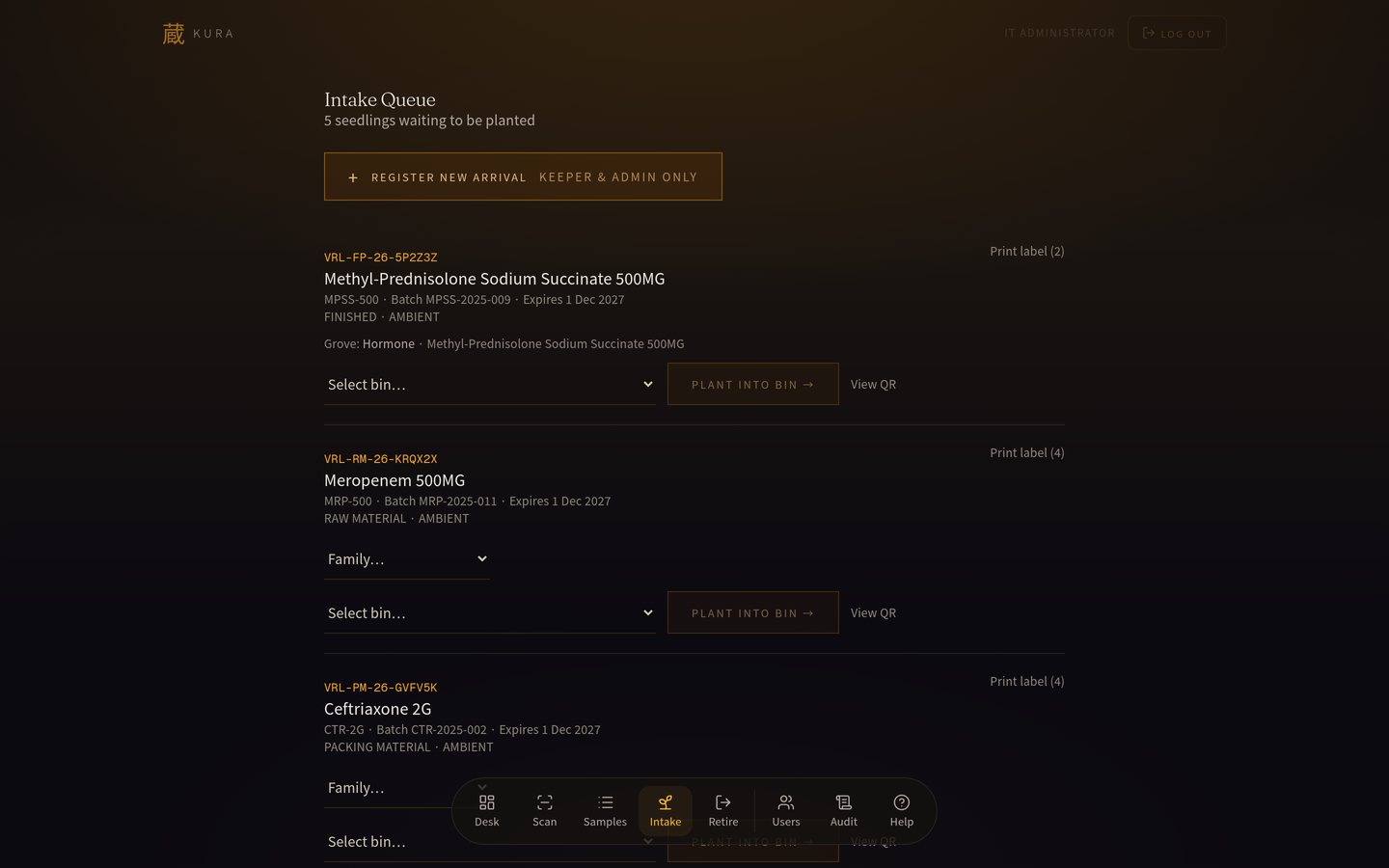
    Receive an arrival

    You
    Registers a sample, prints its label
    It answers
    Mints an immutable ID and waits for a bin
    The intake queue listing new arrivals with plant-into-bin controls
  4. 04 / 07

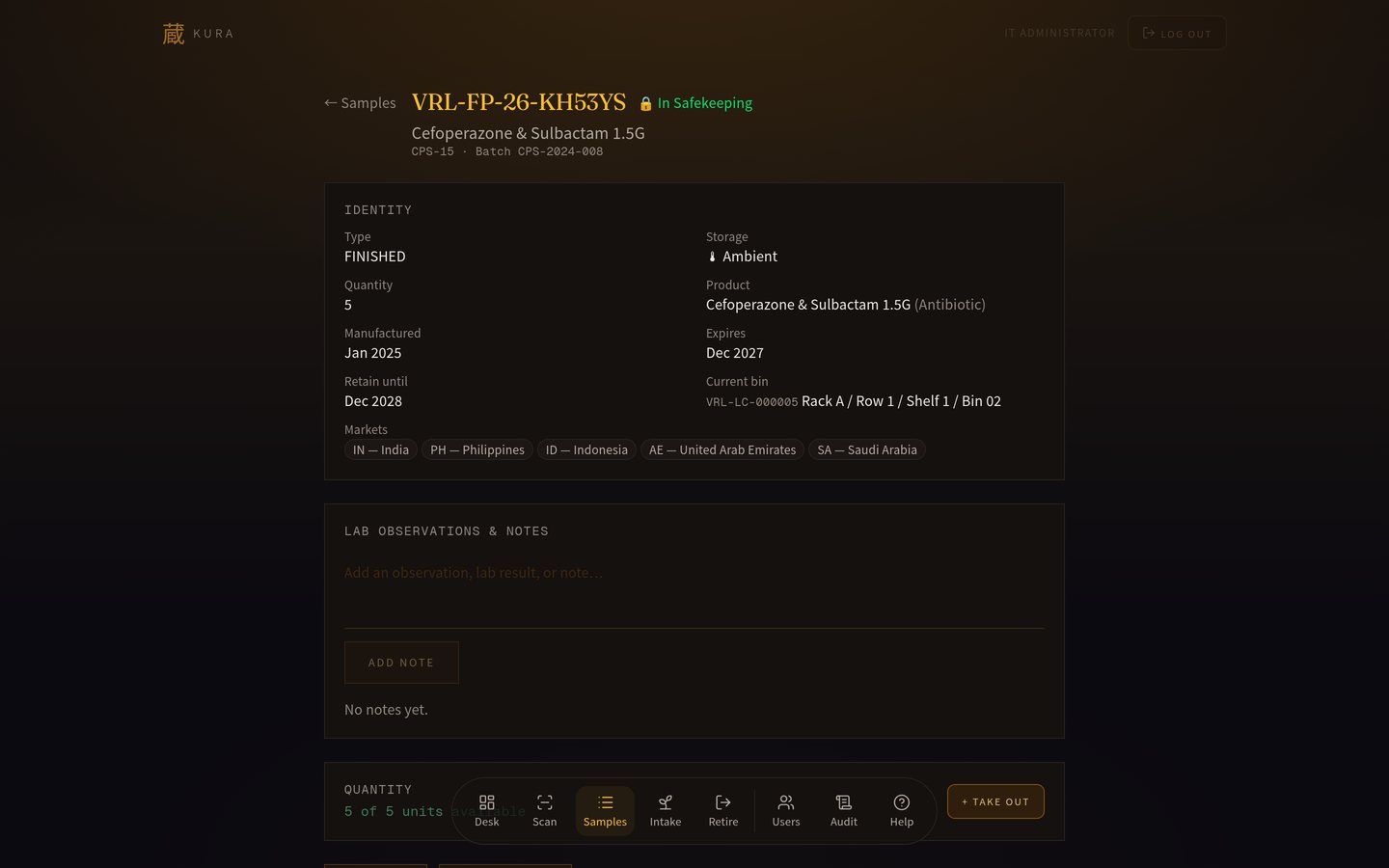
    Open a sample

    You
    Looks one up by ID
    It answers
    Shows expiry, retention date, bin and full movement history
    A sample record with identity block, markets, current bin and take-out control
  5. 05 / 07

    Scan on the phone

    You
    Scans a sample or bin QR code
    It answers
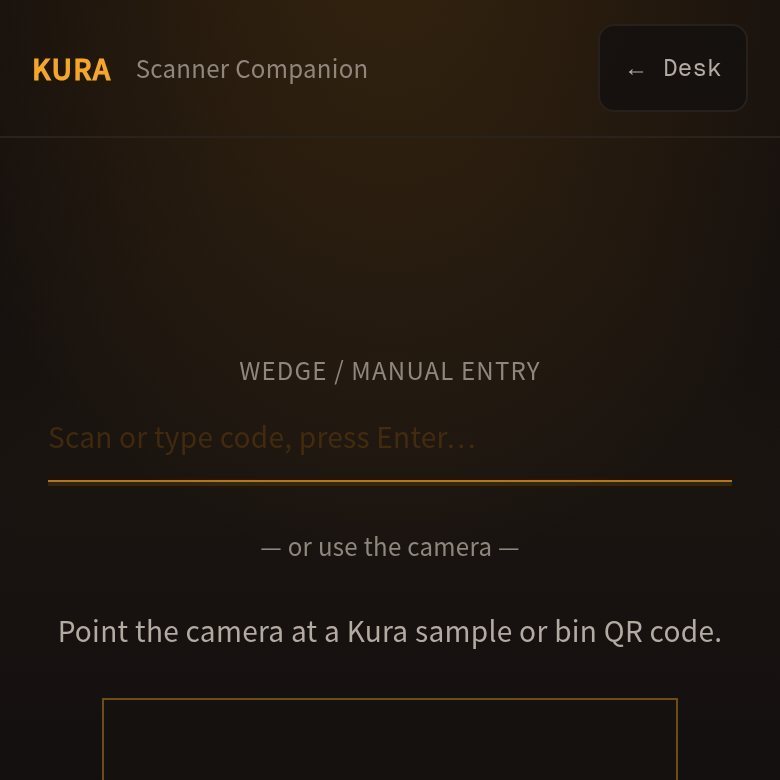
    Resolves the code to put-away or relocation
    The phone scanner companion with manual entry and a camera frame
  6. 06 / 07

    Retire with a witness

    You
    Signs, then a second person signs
    It answers
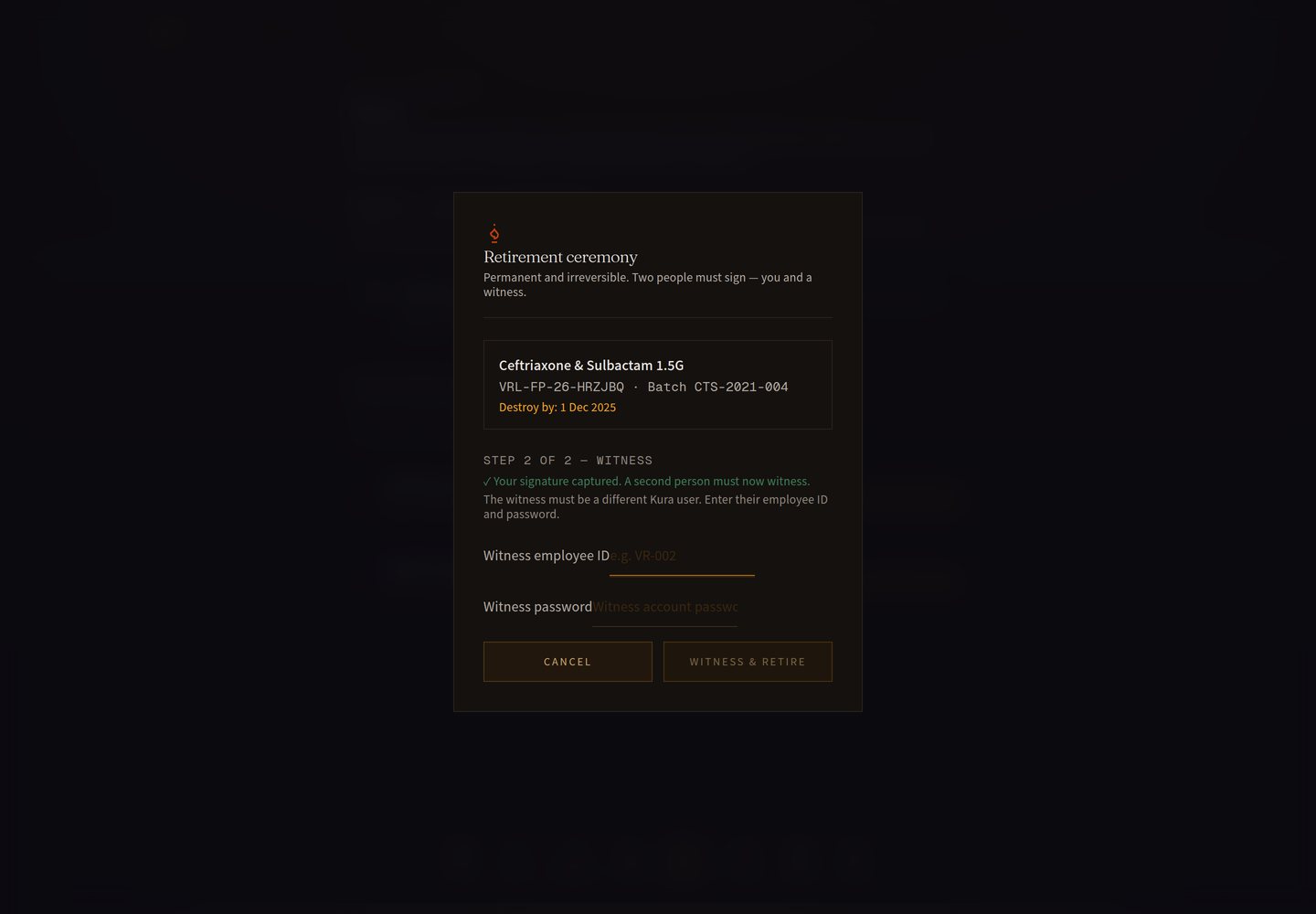
    Refuses a witness who is the same user; destroys only after both
    The retirement ceremony dialog at step two, asking for a witness
  7. 07 / 07

    Print the audit trail

    You
    Opens the audit report
    It answers
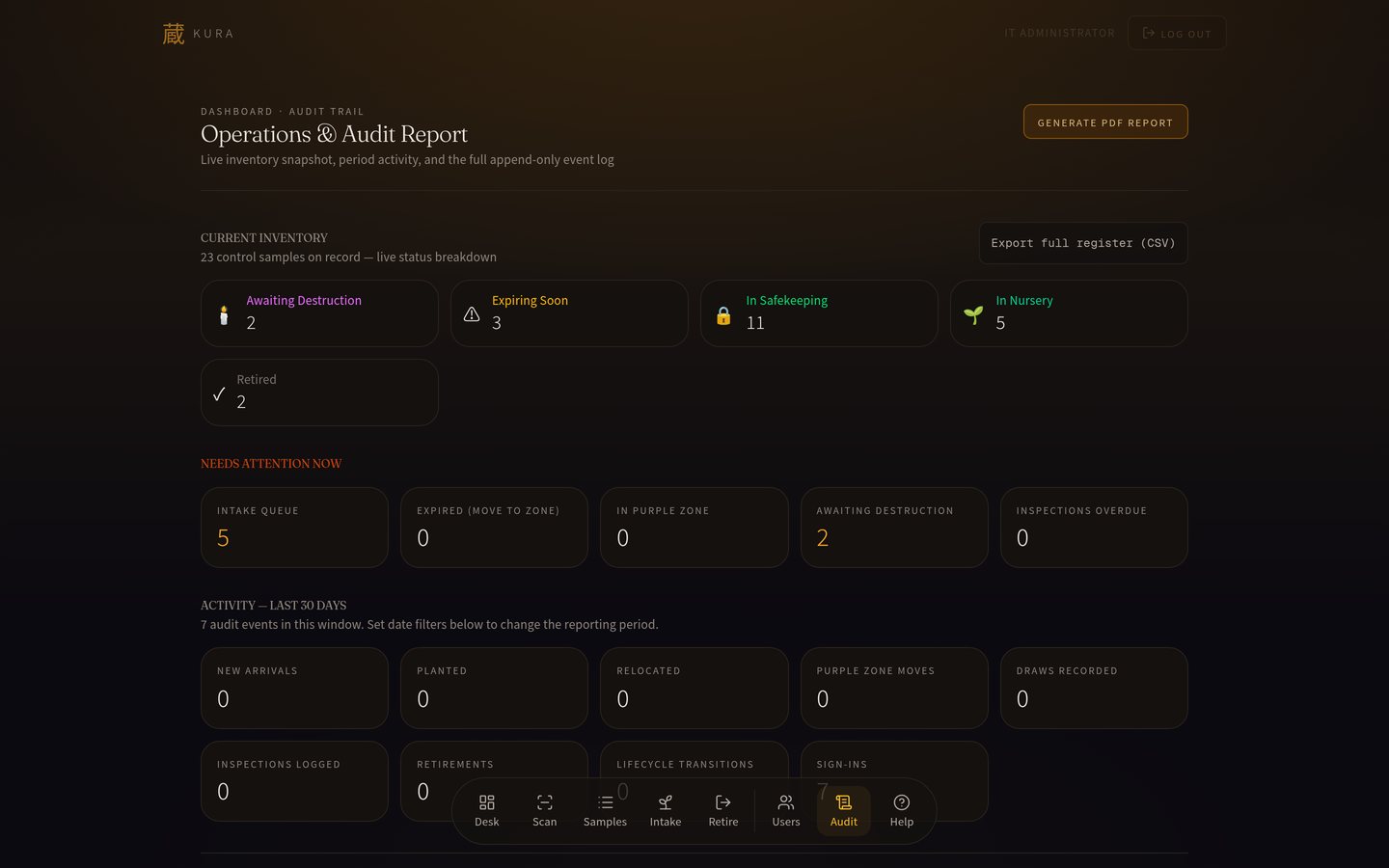
    Lists inventory and every append-only event, ready for review
    The operations and audit report with inventory counts and needs-attention tiles

03 · What was special

What it stands on

  1. A lifecycle that moves itself

    A six-hourly job flags expiring and expired stock. Only a person can move it to the Purple Zone or retire it.

  2. Retention fixed at intake

    The destroy-by date is stored when the sample arrives, so the rule that governed it still governs it at retirement.

  3. A garden above, a cellar below

    An optional 3D monument grows a bloom per sample. The GMP workflow never depends on it.

Compliance is the floor; the storehouse is the place above it.

Making-Of

A paper logbook records what happened. Kura is built so that nothing ages unseen.

The first Notion brief and the first commit, the same day

  1. The world before

    Retention samples at the pharma company I work with were tracked in about two hundred paper logbooks. Multi-market product lists, bin-level locations, periodic inspections and dual signatures did not fit on paper.

  2. One day

    18 June 2026. Documentation first, then code: the scaffold, the database and the first build-log steps landed in one day, with the idea of a storehouse the data could be walked through.

  3. Because of that

    1. The first three days produced 111 commits: scanner companion, lifecycle, labels, audit report, accessibility floor (18–20 June).
    2. A validation pack of screenshots was captured against the running system (2 July).
    3. A 3D monument and its sound layer arrived as an optional garden (2–3 July).
    4. Sign in with Darpan was added; Kura still owns each person’s role (2 August).
    5. The QC review set raw-material retention at expiry plus three years, and existing samples were backfilled (26–27 August).
  4. Until finally

    Kura runs as a team beta in QC, one deployment per unit.

  5. Since then

    Work continues on e2e coverage and the monument’s scale; the documentation hub became the model for the rest of the catalog.

The evidence Process, hands, and artifacts

Process

  1. Origin

    Documentation first, then a Next.js and Prisma scaffold

  2. Core

    Scanner, lifecycle engine and audit report in two days

  3. Doors

    Five doors: Desk, Scan, Samples, Intake, Retire

  4. Garden

    Optional 3D monument with sound, outside the GMP path

  5. Identity

    Sign in with Darpan; Kura keeps the role

  6. Retention

    Raw material kept expiry plus three years, stored per sample

  7. Scale

    Monument tuned to render a thousand blocks

Hands

Akshansh

  • Concept, documentation hub and every product ruling
  • Review of what the agents built

Agents

  • Claude CodePrimary builder
  • CursorExecuted written briefs
  • AmpCo-authored commits
  • ElevenLabsSound cues for the monument