Back to the shelf

044

Lunaworld – Spine AI-First Web Repository

A spherical gallery for every AI build a software company's teams ship each month.

Launched · Started June 2026 · Website · Vibe-Coded

That's the whole thing.

The site's sound is off. The narration still plays.

This reading didn't load. The transcript is below.

Read the transcript

I started with the documentation. Build without writing it down and it never quite lands.

Luna World started in June twenty twenty-six, inspired by Phantom dot land. Every department at the company I work with builds software with AI each month. Luna World is where those builds live, and it's live now.

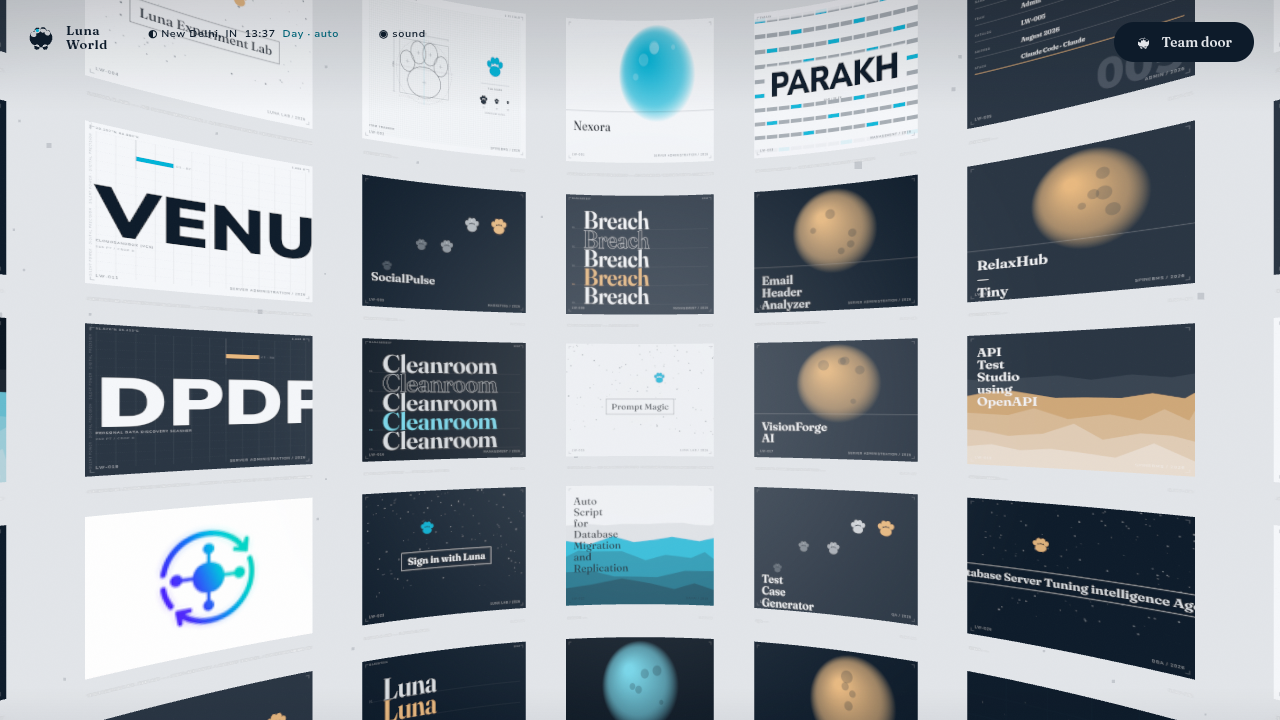
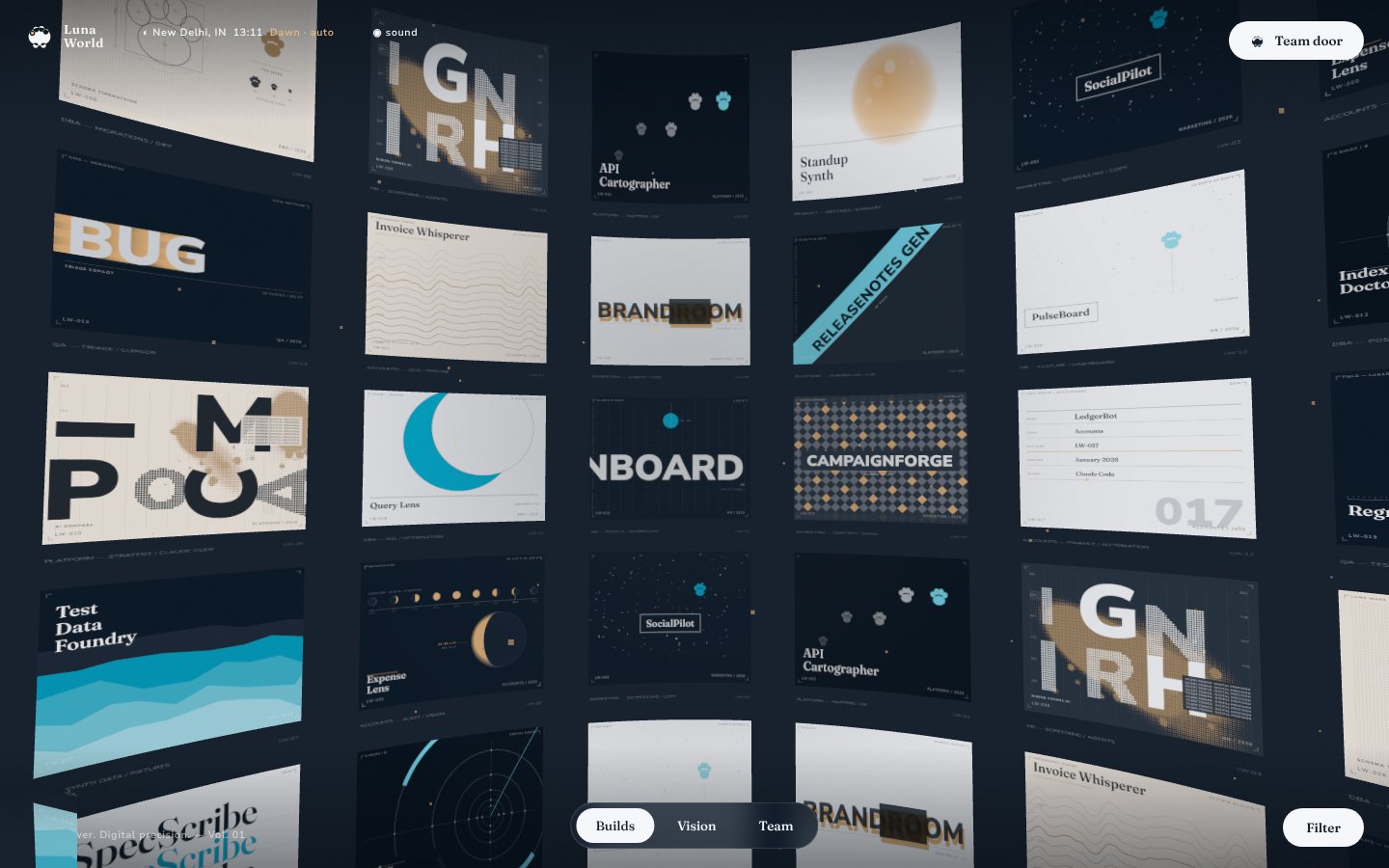
You stand inside a sphere. Every card on the inner wall is something a real team made. Drag to rotate, hover for the name, click to go deeper. The sky shifts with the clock: amber at dawn, rose at dusk, deep navy at night, snow falling through.

Each team tends its own shelf.

Iterative building plus documentation makes work feel whole. Build the foundation, teach the extension, and enable the transformation.

Narrated in my own cloned voice, generated with ElevenLabs v4.
Lunaworld – Spine AI-First Web Repository
No. 044

Every department at the software company I work with builds something with AI each month. Luna World is where those builds live.

I built it as a Three.js spherical gallery. You stand inside a sphere. Every card on the inner wall is something a team shipped. Drag or scroll to rotate. Hover to see the name. Click to step into its detail page. Each card carries a generated poster, a team credit, and the AI tools the team used.

The atmosphere shifts with the clock: dawn amber in the morning, a daylight mist by noon, dusk rose in the evening, deep navy at night, with snow falling through it all. A team filter lets you narrow by department.

Content is tended by the teams themselves. Each department signs in and tends only its own shelf. The database enforces that boundary; nobody can touch what belongs to another team. Every change goes into an append-only activity diary.

I was inspired by Phantom.land. Started in June 2026. Built documentation first, then the product: Next.js, Three.js, GSAP, and Supabase.

Iterative building plus documentation is what makes work feel whole. Build the foundation, teach the extension, enable the transformation. Luna World is live.
01 · The problem

Before it existed

What hurt

Every department builds software with AI each month, and none of it was seen outside the team that made it. There was no shared place to find it, credit it or learn from it.

Who uses it

  • Department teams who publish their builds
  • Platform owner who runs the programme
  • Colleagues who browse what exists
  • 45commits in ten weeks
  • 19poster styles drawn from one registry
  • 5database migrations
  • 211brand rules the build checks

02 · The flow

7 steps, in the order they happen

  1. 01 / 07

    Stand inside the sphere

    You
    Opens the front door
    It answers
    Wraps every published build around the wall; the sky follows the clock
    A dark spherical gallery with poster cards on the inner wall and a Builds, Vision, Team dock
  2. 02 / 07

    Open a build

    You
    Clicks a card
    It answers
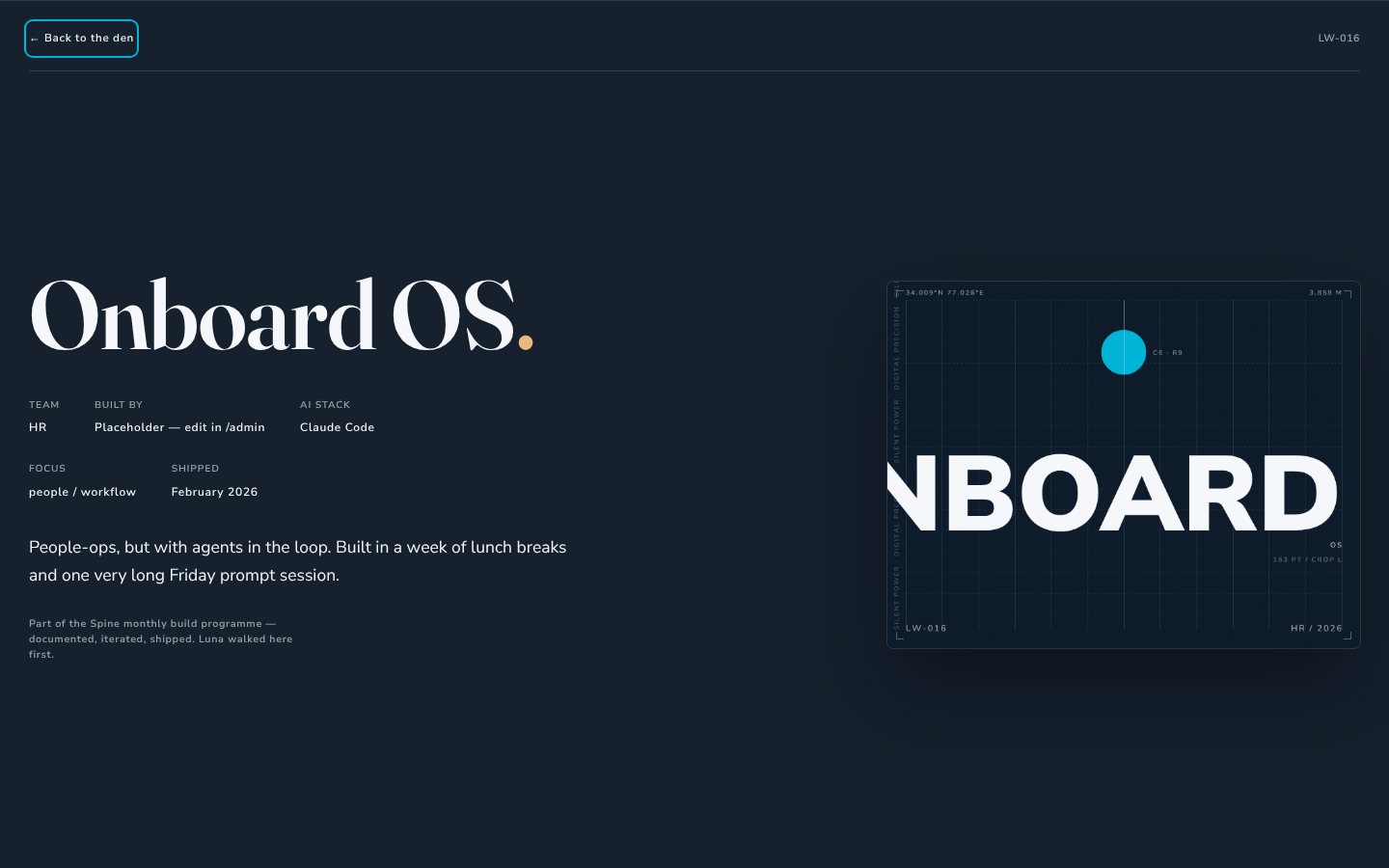
    Dollies in to a page with team, builders, AI stack and ship date
    A build page titled Onboard OS with team, AI stack, focus and a large poster
  3. 03 / 07

    Read the mandate

    You
    Opens Vision
    It answers
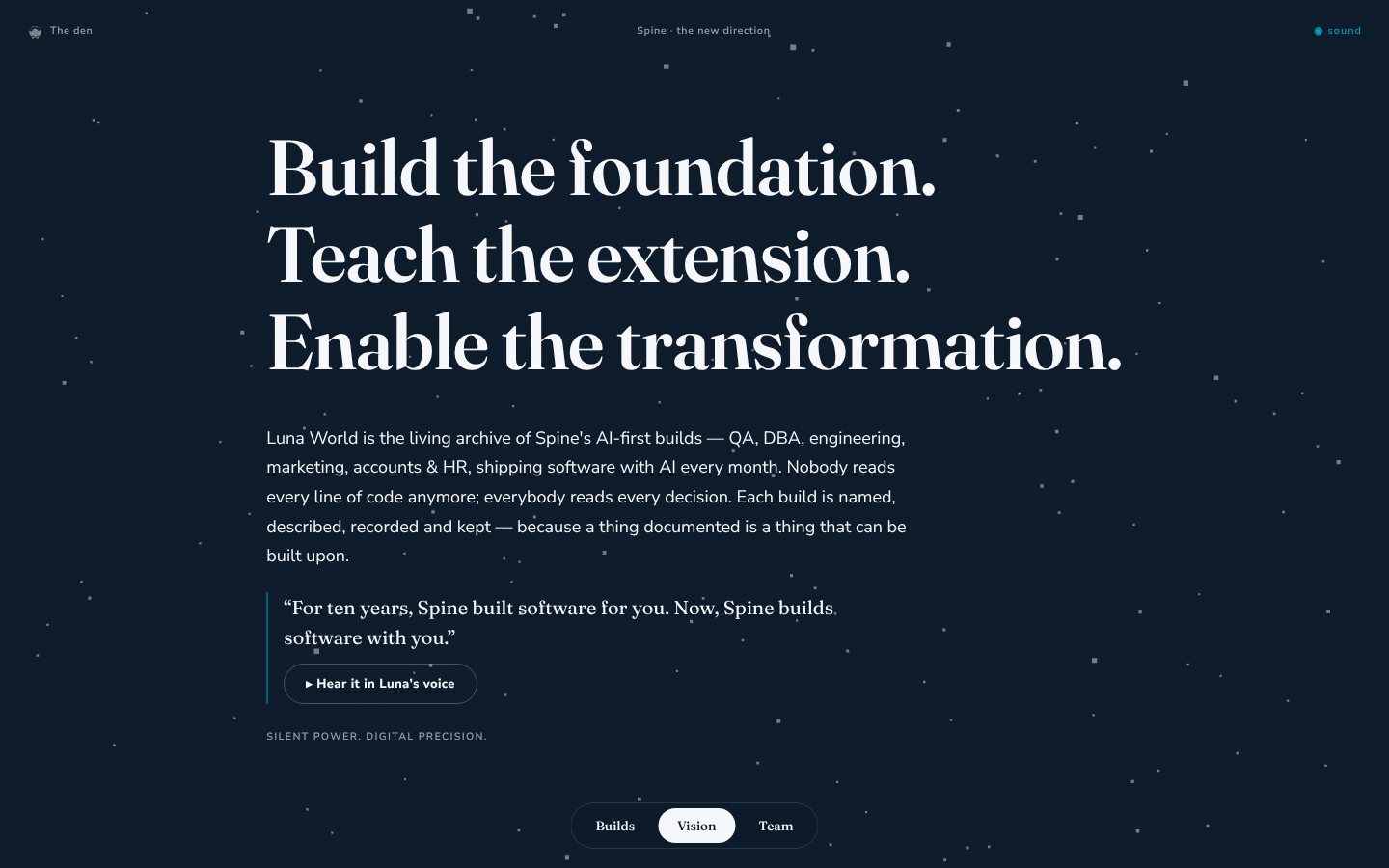
    Shows the three-line mandate and reads it aloud on request
    A page reading Build the foundation, Teach the extension, Enable the transformation
  4. 04 / 07

    Browse the poster law

    You
    Opens the specimen sheet
    It answers
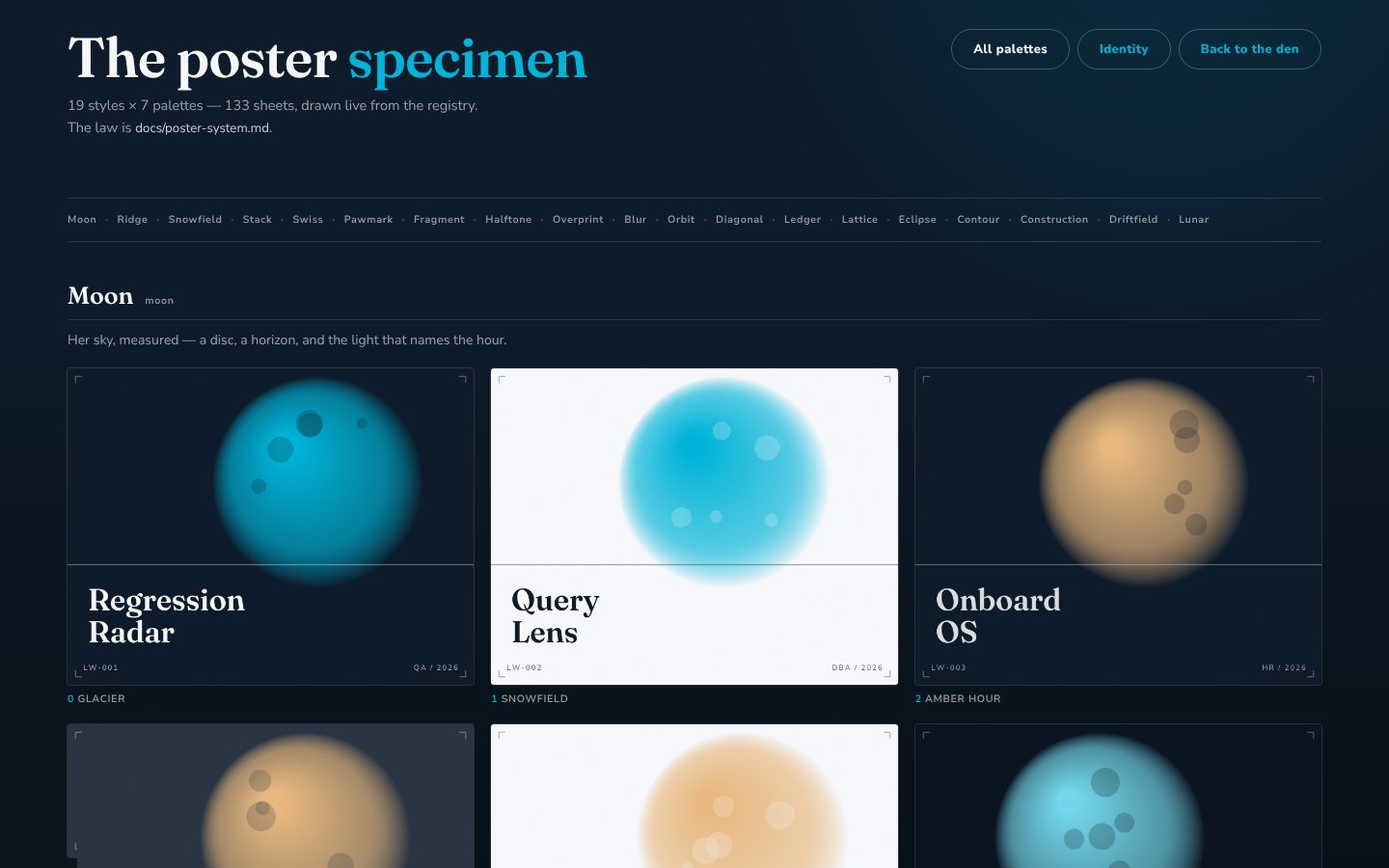
    Draws every poster style in every palette, live from one registry
    The poster specimen sheet with moon posters in glacier, snowfield and amber palettes
  5. 05 / 07

    Check the identity

    You
    Opens the identity page
    It answers
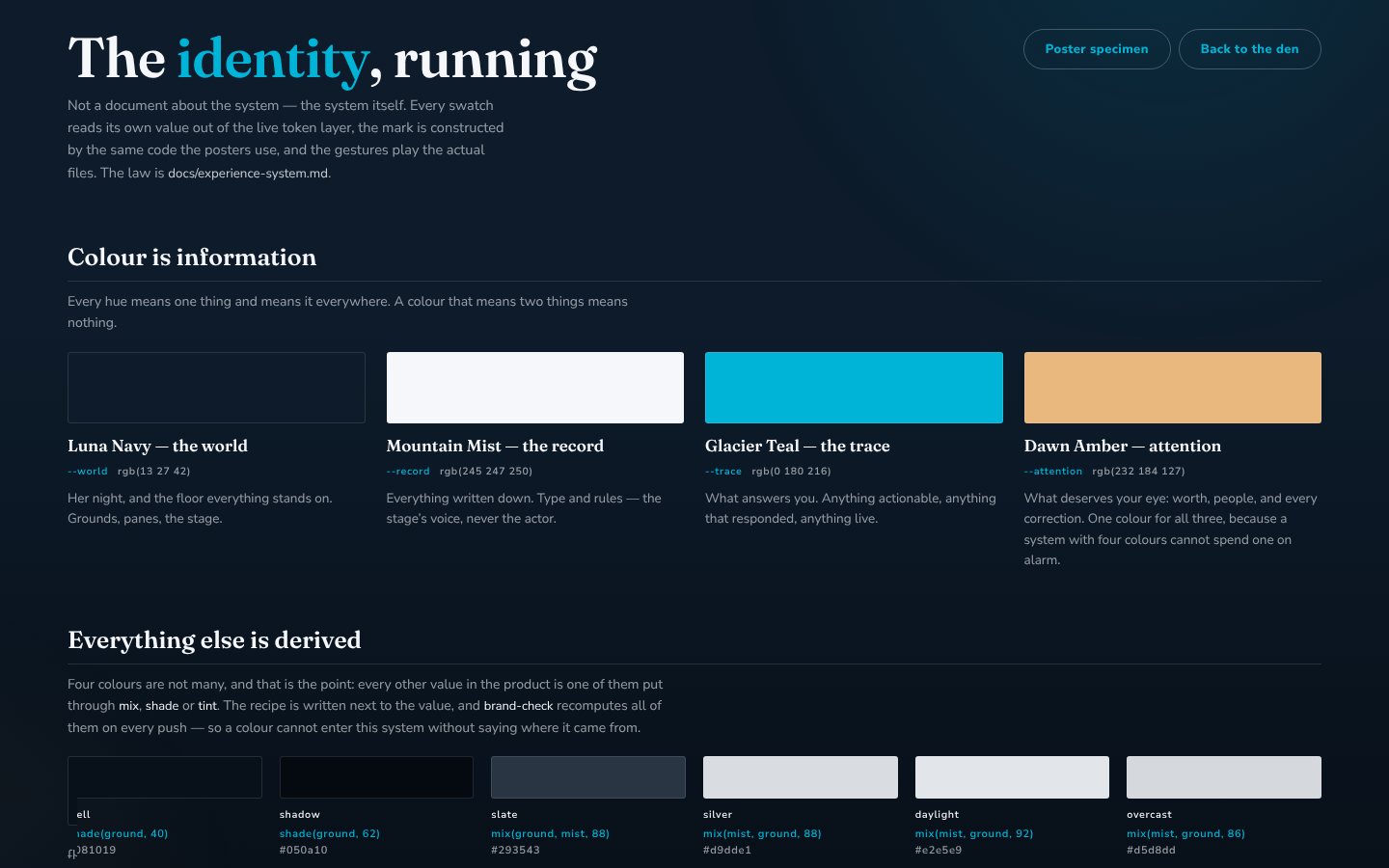
    Shows the four colours and the rules, running as the product itself
    The identity page with four colour swatches: navy, mist, teal and amber
  6. 06 / 07

    Tend a shelf

    You
    Signs in with a department key
    It answers
    Lets the team edit only its own builds; the database refuses the rest
  7. 07 / 07

    Declare the impact

    You
    Enters build hours and hours saved
    It answers
    Holds the publish button until the impact is declared

03 · What was special

What it stands on

  1. Boundaries in the database

    Row-level rules scope every team to its shelf. A trigger stops anyone promoting their own account.

  2. A diary nobody edits

    Every change goes into an append-only activity log written by database triggers – never by the app.

  3. The law is machine-checked

    Colour, type, contrast, and sound rules are audited on every build; a gain or hue out of tier fails it.

Each team tends its own shelf, and the database enforces it.

Making-Of

A gallery you stand inside, where every card is something a real team shipped.

The first commit in the repository, inspired by the Phantom.land gallery

  1. The world before

    Each department built software with AI every month. The work lived in its own folders and chats, and nobody outside the team saw it.

  2. One day

    12 June 2026. One day: the spherical gallery, a database-backed CMS, the Vision and Team pages and a per-department access model.

  3. Because of that

    1. 12 June 2026. Row-level security scoped each department to its own shelf, and the activity diary began.
    2. 3 July 2026. Cinematic sound design, scored with ElevenLabs, gave the gallery a voice.
    3. 5 August 2026. The impact ledger and its publish rule: no impact declared, no publish.
    4. 8 August 2026. The poster system and identity law were written and built over eleven phases.
    5. 9 August 2026. Sound was rebuilt on the Luna Sound Library, with four circadian beds.
    6. 19 August 2026. One generated symbol, a snow-leopard track, replaced four hand-drawn copies.
  4. Until finally

    Luna World is live, with department teams tending their own shelves.

  5. Since then

    The poster system and the identity pass are in place. A monthly impact digest is next.

The evidence Process, hands, and artifacts

Process

  1. Origin

    A Three.js sphere and a department-scoped CMS, documentation first

  2. Access

    Boundaries enforced in the database, not the interface

  3. Voice

    Sound as a quiet layer: ambience and nine gestures

  4. Impact

    Publishing requires a declared impact

  5. Posters

    The poster grammar written as law, with a live specimen

  6. Sound law

    The sound library becomes the master; every gain sits in a tier

  7. The Track

    One symbol, generated, with the favicon telling the hour

Hands

Akshansh

  • Concept and the case for a shared home for AI builds
  • Brand law and every ruling on identity and sound
  • Review and merge of each pull request

Agents

  • Claude CodePrimary builder of the CMS, posters, sound and identity
  • CursorBuilt the impact ledger and refreshed the docs
  • ElevenLabsFirst scored the gallery’s sound