Back to the shelf

062

Machine Hallucinations

A generative visual experiment in Three.js, built in the spirit of Refik Anadol's data sculptures.

Launched · Started June 2026 · Experiment · Vibe-Coded

That's the whole thing.

The site's sound is off. The narration still plays.

This reading didn't load. The transcript is below.

Read the transcript

Refik Anadol calls his work data sculptures. That idea stayed with me. In June twenty twenty-six, I built something in that spirit. I called it Machine Hallucinations.

It is a generative visual experiment, built in Three.js with simplex noise and postprocessing. The form keeps moving, keeps shifting. I vibe-coded it with AI, and I let it wander.

The original host died. The page went dark. In August twenty twenty-six, I rescued it and brought it back. It is live again, right now.

This is an experiment made to explore, not a product. I hope it makes you curious, too.

Narrated in my own cloned voice, generated with ElevenLabs v4.
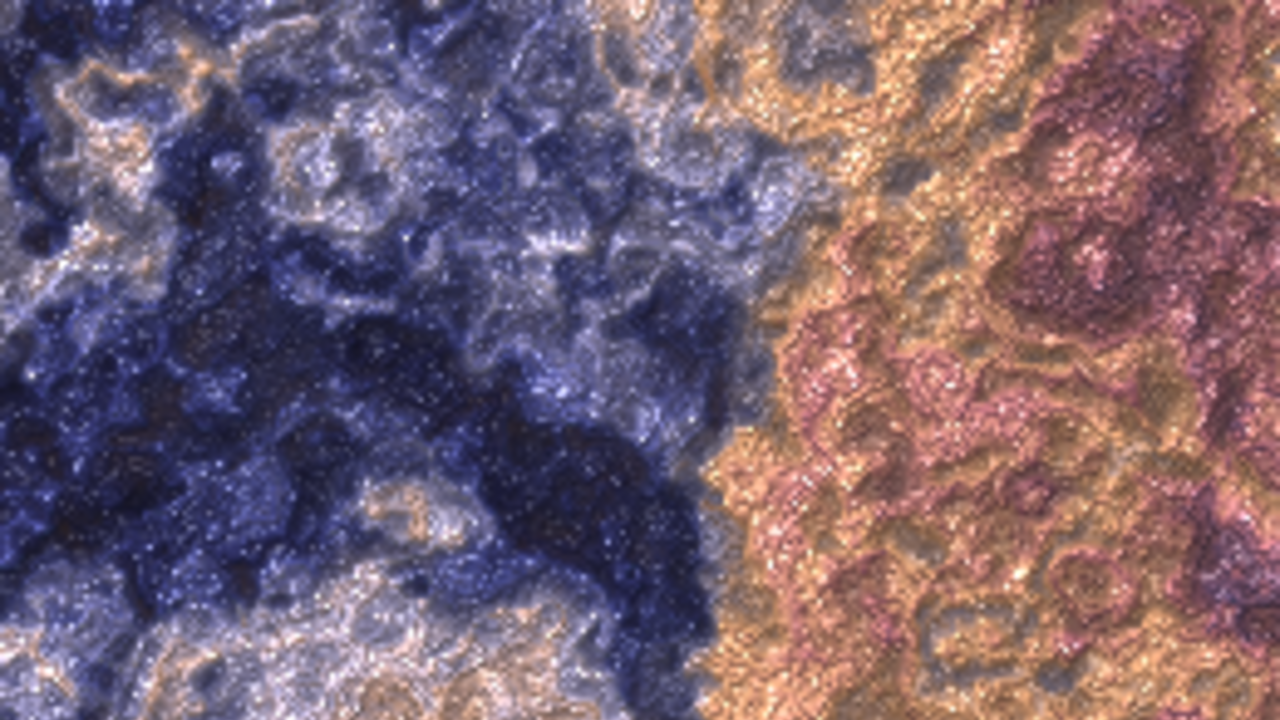
Machine Hallucinations
No. 062

Refik Anadol makes data sculptures. He takes information and renders it as form: shifting, alive. That idea stayed with me.

Machine Hallucinations is my attempt to sit with the same question, at a much smaller scale. I vibe-coded it with AI in June 2026. It runs in Three.js, using simplex noise and a postprocessing pipeline to keep the form in constant motion. There is no endpoint. The shape keeps moving and shifting because that is what it is meant to do.

It is an experiment, made to explore, not a product.

Later, the original host died, and the link stopped working. In August 2026 I rescued it and rehosted it, part of a run where I brought several dead projects back. It lives again now.

It is live. Go take a look.

The making

  • TypeScript
  • React
  • Vite
  • Three.js

01 · The problem

Before it existed

What hurt

A head-office wall needs something alive to look at, and a pre-rendered film loops and ends. This piece is generated live, so it never repeats.

Who uses it

  • Viewers of a big screen
  • Whoever runs a wall display
  • 257lines of shader – the whole artwork
  • 2renderers: WebGL2, with a 2D fallback
  • 12commits

02 · The flow

4 steps, in the order they happen

  1. 01 / 04

    Open the piece

    You
    Opens the page, full screen
    It answers
    Starts a live shader: folded sheets of pigment drift across the screen
    A full-screen field of pale violet and white folded pigment with grainy relief
  2. 02 / 04

    Move the pointer

    You
    Sweeps the mouse across the screen
    It answers
    Pushes the surface away from the pointer, then eases back once it stops
    The pigment field, nearly white, mid-motion after a pointer sweep
  3. 03 / 04

    Let the palette turn

    You
    Leaves it running
    It answers
    Morphs slowly between an ice-and-fire palette and a violet-dream palette
    The same field now in pale blue and amber folds
  4. 04 / 04

    Leave it on for weeks

    You
    Puts it on a wall display
    It answers
    Keeps time on the CPU so long uptime never stutters
    The field in ice blue with amber at the lower right, a new arrangement of folds

03 · What was special

What it stands on

  1. Folded sheets, not particles

    A sparse-particle first version was dropped for looking like a starfield. The surface is warped ridged noise that reads as folded pigment.

  2. Built to stay on

    Time is computed on the CPU in double precision, so weeks of uptime never hitch. If WebGL2 fails, a 2D version takes over.

  3. Light as a material

    Relief shading, two specular lobes, crest bloom and a pearlescent edge make the colour read as lit, not painted.

One shader, always on, never the same twice.

Making-Of

A homage in one fragment shader, made to run on a wall for weeks.

The first commit on the repository

  1. The world before

    Refik Anadol’s data sculptures turn vast datasets into shifting pigment on gallery walls. Akshansh wanted to learn how that kind of image is made.

  2. One day

    10 June 2026. The repository opens from a Replit workspace; nine more commits land by 15 June.

  3. Because of that

    1. 15 June: an interactive 3D particle visualisation in Three.js, inspired by Refik Anadol.
    2. That week: the sparse-particle version is discarded for looking like a starfield. The artwork becomes folded sheets of pigment in one shader.
    3. 15 June: WebGL2 rendering for performance and stability.
    4. 15 June: fidelity and stability work for long-term display, with time kept on the CPU.
    5. 15 June: build fixes, then published as a static page.
    6. 31 August: the Replit host is dead. The page is rehosted on here.now.
  4. Until finally

    The piece is live again on here.now.

  5. Since then

    A November review named its limit: a flat field lit to look raised. The next wall piece starts from a picture instead.

The evidence Process, hands, and artifacts

Process

  1. Origin

    Repository opens from a Replit workspace

  2. First build

    Interactive 3D particle visualisation inspired by Refik Anadol

  3. Rebuild

    Particles dropped as starfield-like; folded sheets in one fragment shader

  4. Hardening

    WebGL2 path and long-display stability work

  5. Publish

    Published as a static page, no backend

  6. Rescue

    Host dead; rehosted on here.now

Hands

Akshansh

  • The idea: a homage to data sculptures, as a live shader
  • Every product call
  • The rescue and rehosting

Agents

  • Replit AgentBuilt the visualisation, shader and fallback from prompts
  • Claude CodeFixed the lockfile so the project builds on Apple Silicon (August)