Back to the shelf

050

Muhurat

A full-screen countdown to a head office inauguration, told entirely in analog clock hands.

Launched · Started July 2026 · Web App · Notion-First

That's the whole thing.

The site's sound is off. The narration still plays.

This reading didn't load. The transcript is below.

Read the transcript

Muhurat means the auspicious moment, the exact point when something worthy begins.

Twenty-five December twenty twenty-six is the inauguration of a new head office for the pharma company I work with. Every screen on the building site runs this page as the homepage. The engineering team sees it every day, a quiet count of the time remaining.

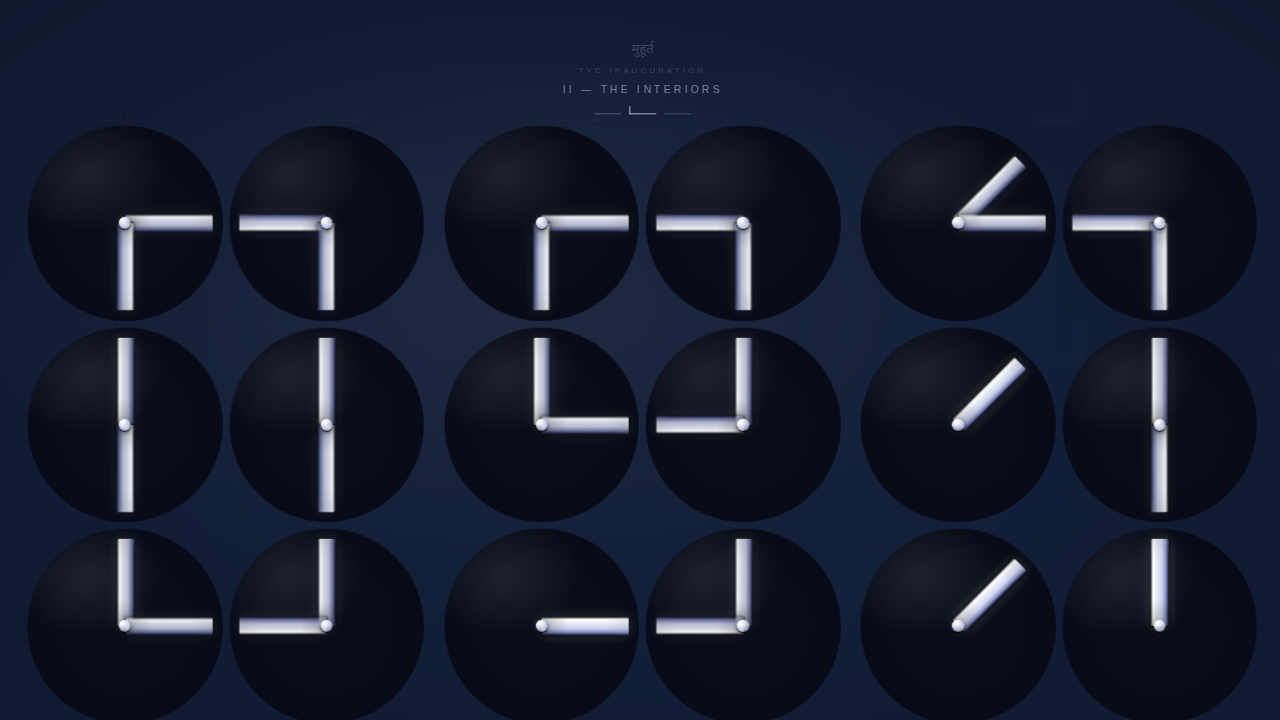
A wall of small analog clock faces makes the digits. The hands move with real clock physics, then choreograph themselves into numbers. No font glyphs, only hands. Inspired by ClockClock twenty-four.

Three rolling labels mark the chapters: structure, interiors, inauguration. No buttons, no scroll. It went live in July, and it runs day and night, for about one hundred sixty days.

Take a look.

Narrated in my own cloned voice, generated with ElevenLabs v4.
Muhurat
No. 050

Muhurat means the auspicious moment. I built this page as a full-screen countdown to 25 December 2026: the day the pharma company I work with inaugurates its new head office, down to the second.

The engineering team building that office sees it every day. Muhurat is set as the browser homepage on every screen inside the building.

The display is not text. It is a wall of small analog clock faces, each pair of hands moving with real clock physics. Together they choreograph themselves into the countdown digits. The digits are never font glyphs. They are made entirely from clock hands. The idea comes from ClockClock 24: time revealed through movement.

Three rolling labels mark the chapters as the number falls: structure, interiors, inauguration. There are no buttons, no scroll, nothing to press. Muhurat must run flawlessly, day and night, for about 160 days.

I built the documentation first, then the page. It has been live since July 2026, as a fully static page. Launched.

The making

  • HTML
  • CSS
  • TypeScript
  • Vite
  • Vercel

01 · The problem

Before it existed

What hurt

A building site needs one shared promise on every screen. A date on a poster is easy to ignore; a count that moves is not.

Who uses it

  • Engineering team on site
  • Site and project leads
  • Anyone passing a screen inside the campus
  • 39commits in seven weeks
  • 18clock faces, 36 hands
  • 3 minbetween each choreography
  • 0buttons on the page

02 · The flow

7 steps, in the order they happen

  1. 01 / 07

    Open the browser

    You
    Opens any screen on site
    It answers
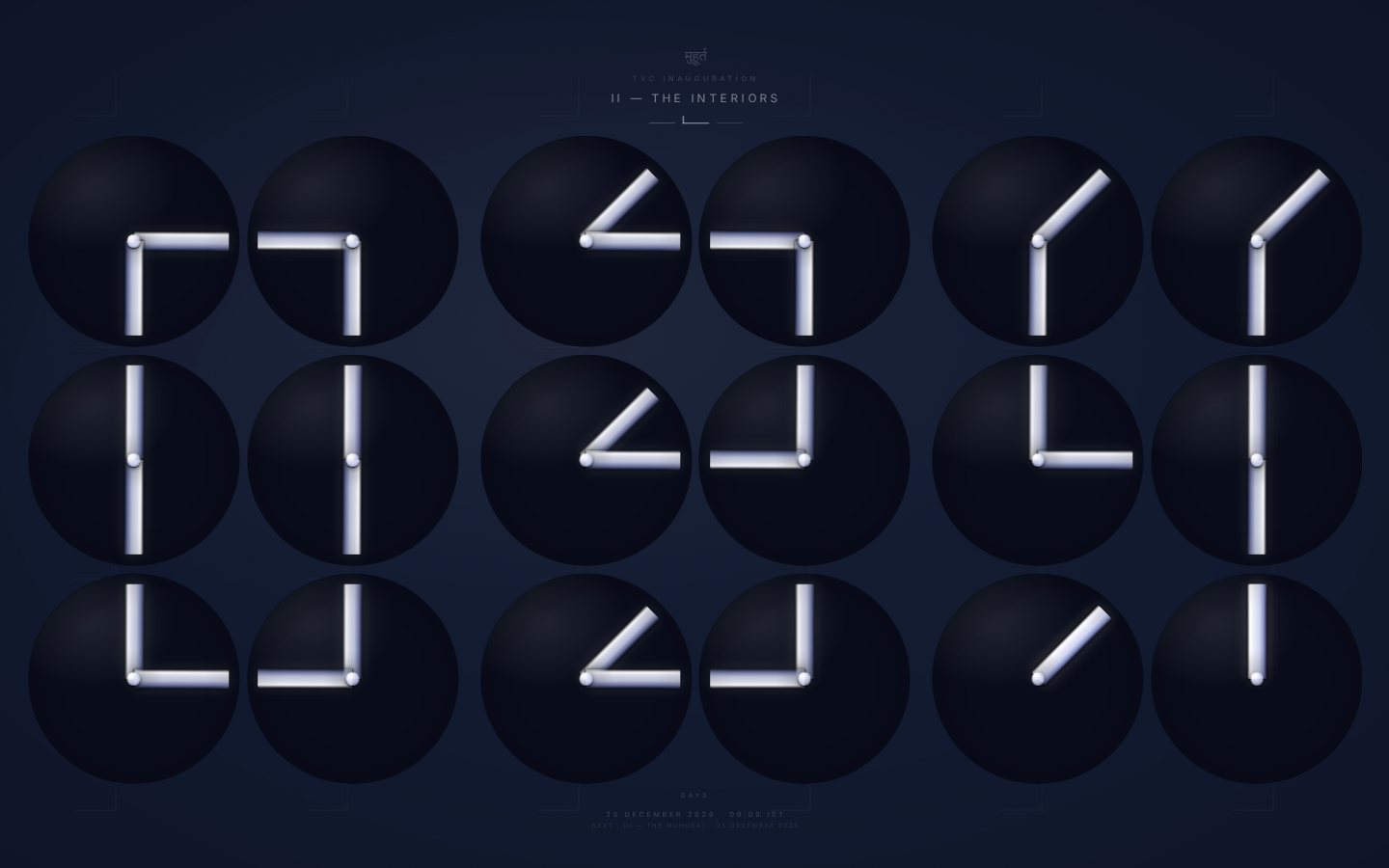
    Fills it with eighteen clock faces counting the days to 25 December
    Eighteen dark clock faces whose white hands form the three digits 034
  2. 02 / 07

    Read the days

    You
    Glances at the wall
    It answers
    Forms three digits from hand angles; the count rolls at India midnight
  3. 03 / 07

    Watch it dissolve

    You
    Waits a few minutes
    It answers
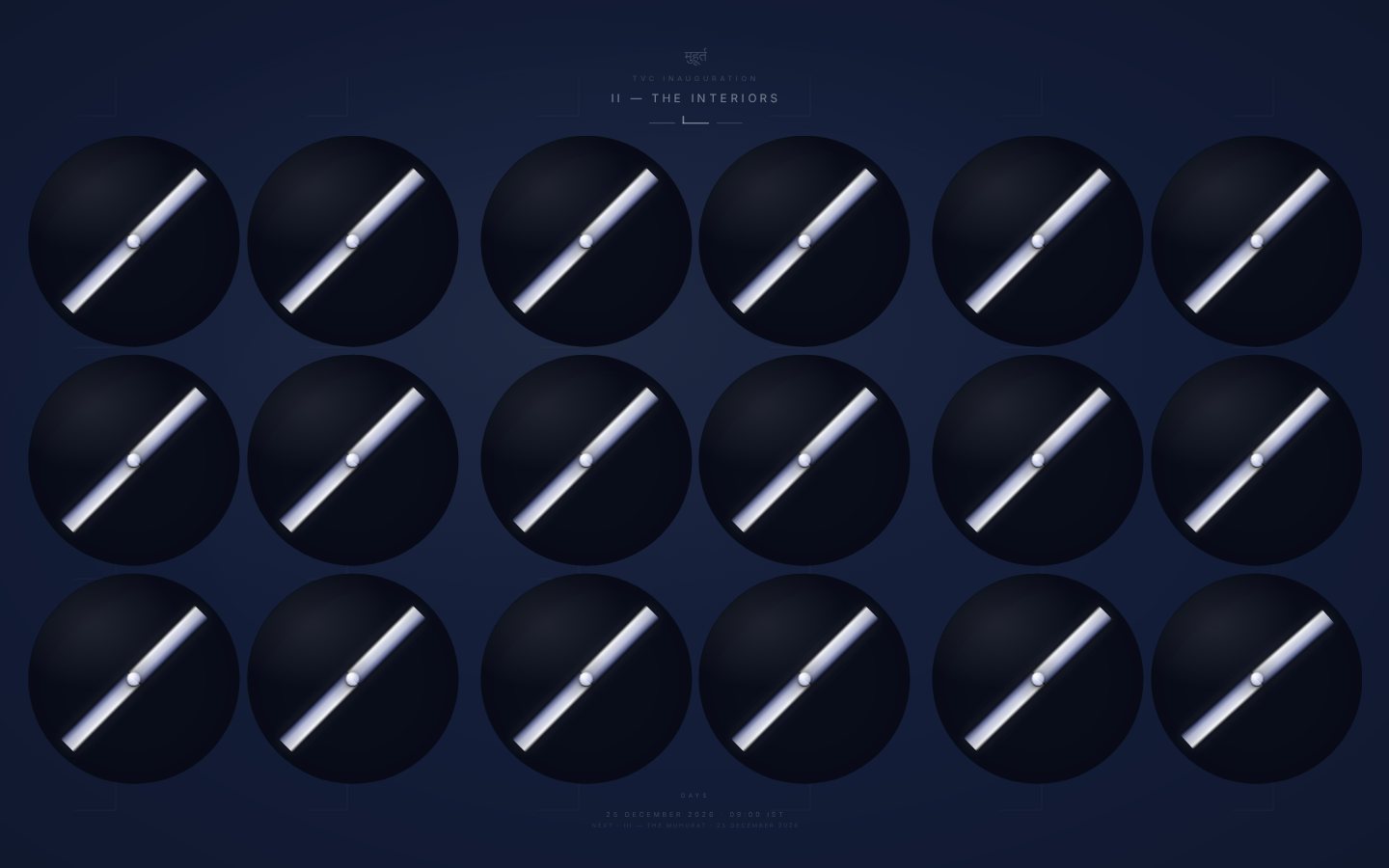
    Hands break formation and align in one sweep, then fall into a shared shape
    All eighteen faces with hands parallel on one diagonal
  4. 04 / 07

    See it reform

    You
    Keeps watching
    It answers
    Cascades the hands back into the day count, corner to corner
  5. 05 / 07

    Know the chapter

    You
    Looks at the header
    It answers
    Names the chapter – structure, interiors or the muhurat – and the next date
  6. 06 / 07

    Leave it alone

    You
    Does nothing
    It answers
    Runs unattended for months, drifting a few pixels now and then against screen burn
  7. 07 / 07

    Open it on a phone

    You
    Opens the link on a phone
    It answers
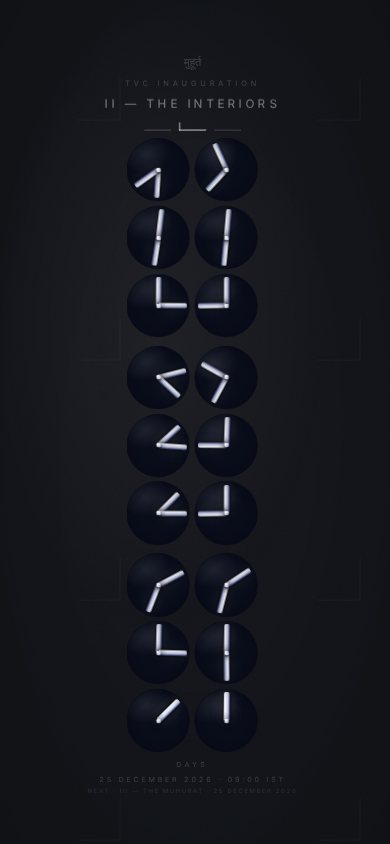
    Stacks the faces in one column so the count stays readable
    Phone view: the eighteen faces stacked in a tall column

03 · What was special

What it stands on

  1. Hands, never glyphs

    Every digit is built from hand positions. No font draws a number anywhere on the wall.

  2. One symbol, found

    The commonest hand pair across all ten digits reads 9:00 – the hour of the opening. It became the mark.

  3. Built to be ignored

    No buttons, no scroll, no controls. Day and night, for about 160 days, it keeps correct time.

A countdown told only in the angles of clock hands.

Making-Of

A wall of clock hands that counts down to the day the building opens.

The Notion build hub and the first working build, the same day

  1. The world before

    Hundreds of tasks and timelines had to converge on one opening day, and nothing on site said how close it was.

  2. One day

    18 July 2026. The brief: a zero-interaction page for every screen at the campus, with digits formed only by clock hands, in the spirit of ClockClock 24.

  3. Because of that

    1. The wall, its hand physics and the deployment all landed in one day (18 Jul).
    2. A sweep ballet was set to fire every three minutes, after two minutes felt busy and five sparse (18 Jul).
    3. The day count was made to roll at India midnight, not at the 9:00 target hour (19 Jul).
    4. The “6” was redrawn so it could not be misread as a “5” (21 Jul).
    5. An identity was found in the digit font itself – the Angle – and ratified (9 Aug).
    6. A reusable setup behind a secret path was finished, so the same wall can count down any event (4 Sep).
  4. Until finally

    The wall runs live as the homepage on site screens, counting down to 25 December 2026.

  5. Since then

    It is built as an inauguration engine: new event, same wall.

The evidence Process, hands, and artifacts

Process

  1. Brief

    Zero interaction; digits from hands only; correct time in India, whatever the machine says

  2. Ship

    Static page on Vercel, deployed the day it was built

  3. Pacing

    Choreography every three minutes, hands slowed for a calmer feel

  4. Count

    Roll the day at India midnight

  5. Legibility

    Redraw the six so it cannot read as a five

  6. Identity

    The Angle as the one symbol; the wall names itself

  7. Engine

    Config-driven events and a secret setup path

Hands

Akshansh

  • The brief, the reference and the pacing rulings
  • Approval of the identity, walked end to end

Agents

  • Replit AgentThe first build, in most of the commits of the first week
  • Claude CodeThe pacing and glyph passes, and the identity
  • CursorThe README refresh and the reusable event engine
  • SpiralThe README voice