Back to the shelf

026

Say the Color, Not the Word

A browser party game that proves your own brain works against you.

Launched · Started January 2026 · Game · Vibe-Coded

That's the whole thing.

The site's sound is off. The narration still plays.

This reading didn't load. The transcript is below.

Read the transcript

Your brain reads words automatically. That is the problem. It is also why this game is so hard.

The Stroop effect is psychology's most famous demonstration of cognitive interference. Show someone the word red printed in blue ink and ask them to name the color. Watch them hesitate. Reading fires before thinking can stop it.

In January twenty twenty-six, I built a browser game around that hesitation. Color words appear in mismatched ink. A timer counts down. Scoring tracks how well you override the reflex. Plain HTML, CSS, and JavaScript, vibe-coded with AI.

Pull it up at a gathering. Everyone gets it immediately. Everyone struggles just as fast. Instant shared humility is worth building for.

Narrated in my own cloned voice, generated with ElevenLabs v4.

The Stroop effect is one of psychology’s most famous demonstrations of cognitive interference. Show someone the word RED printed in blue ink and ask them to say the ink color. They hesitate. Reading is automatic. It fires before you can stop it, and that reflex collides with what you’re being asked to do. The hesitation is the effect.

In January 2026, I vibe-coded a game around it. Color words like RED, BLUE and GREEN appear in mismatched ink. Your job is to say the ink color, not read the word. It sounds simple until the clock starts.

Timed rounds keep the pressure on. Scoring tracks how well you override the reflex. The interface is clean: one browser window, no downloads, no accounts, nothing to install. Plain HTML, CSS and JavaScript.

It’s the kind of thing you pull up at a gathering and everyone immediately gets.

It’s launched.

The making

  • HTML
  • CSS
  • JavaScript

01 · The problem

Before it existed

What hurt

Party games ask for downloads, sign-ups, and a page of rules. I wanted one that is a single link and starts in seconds.

Who uses it

  • Me, at a gathering
  • Friends passing a phone around
  • Anyone curious about the Stroop effect
  • 15words per round
  • 3timers: 15, 30 or 60 seconds
  • 1HTML file, no dependencies
  • 1 dayfrom voice note to first version

02 · The flow

5 steps, in the order they happen

  1. 01 / 05

    Choose the challenge

    You
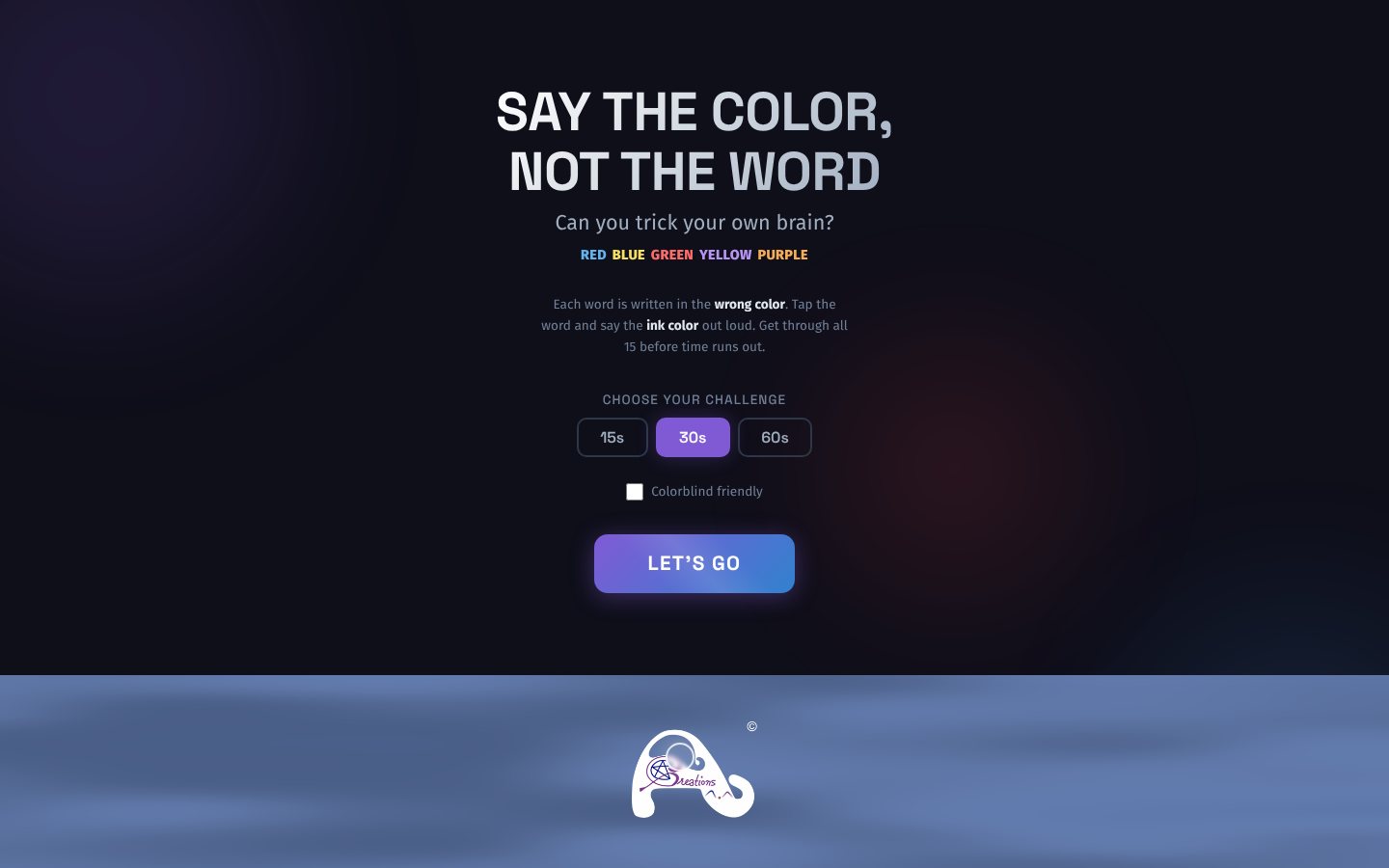
    Picks 15, 30 or 60 seconds, then Let’s Go
    It answers
    Explains the one rule: the word lies, say the ink color
    The landing page with the title, three timer buttons and a colorblind option
  2. 02 / 05

    Read the ink, not the word

    You
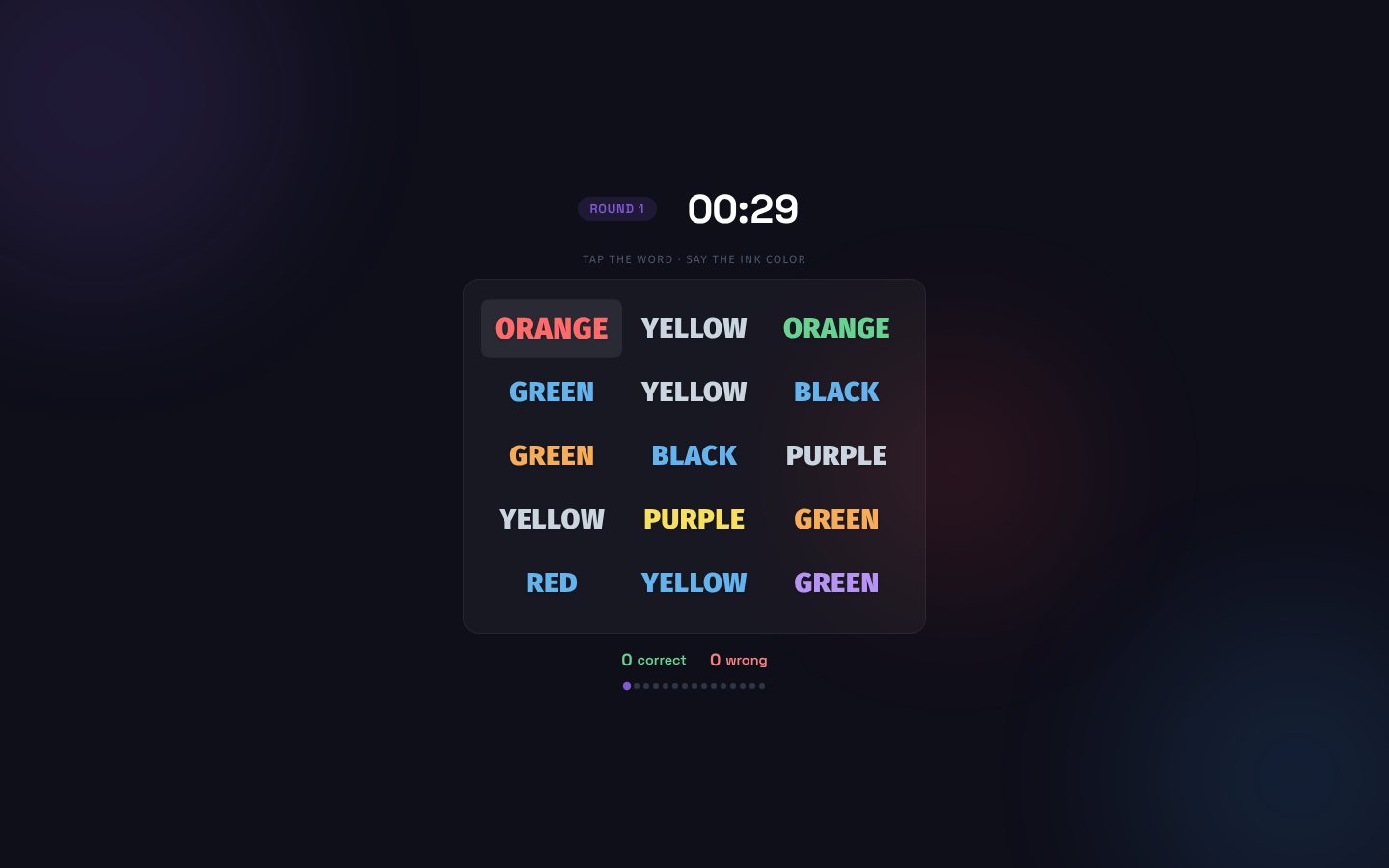
    Says the ink color out loud
    It answers
    Shows 15 words, each printed in a color that never matches
    A grid of fifteen color words in mismatched ink beneath a 29 second timer
  3. 03 / 05

    Mark each word

    You
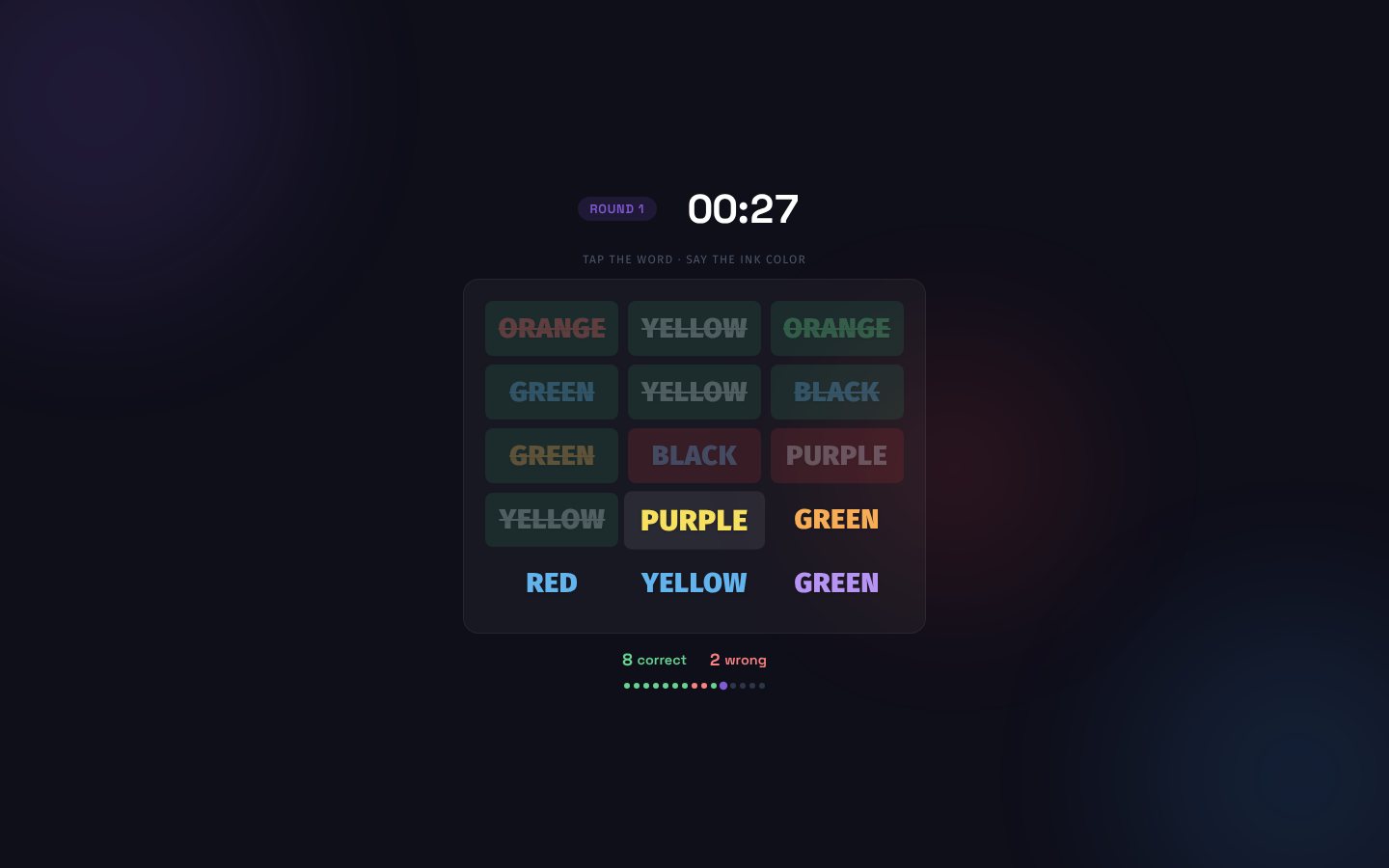
    Taps for right, long-presses for wrong
    It answers
    Strikes the word through and fills a dot, green or red
    Several words struck through, with eight correct and two wrong in the score line
  4. 04 / 05

    Turn on the labels

    You
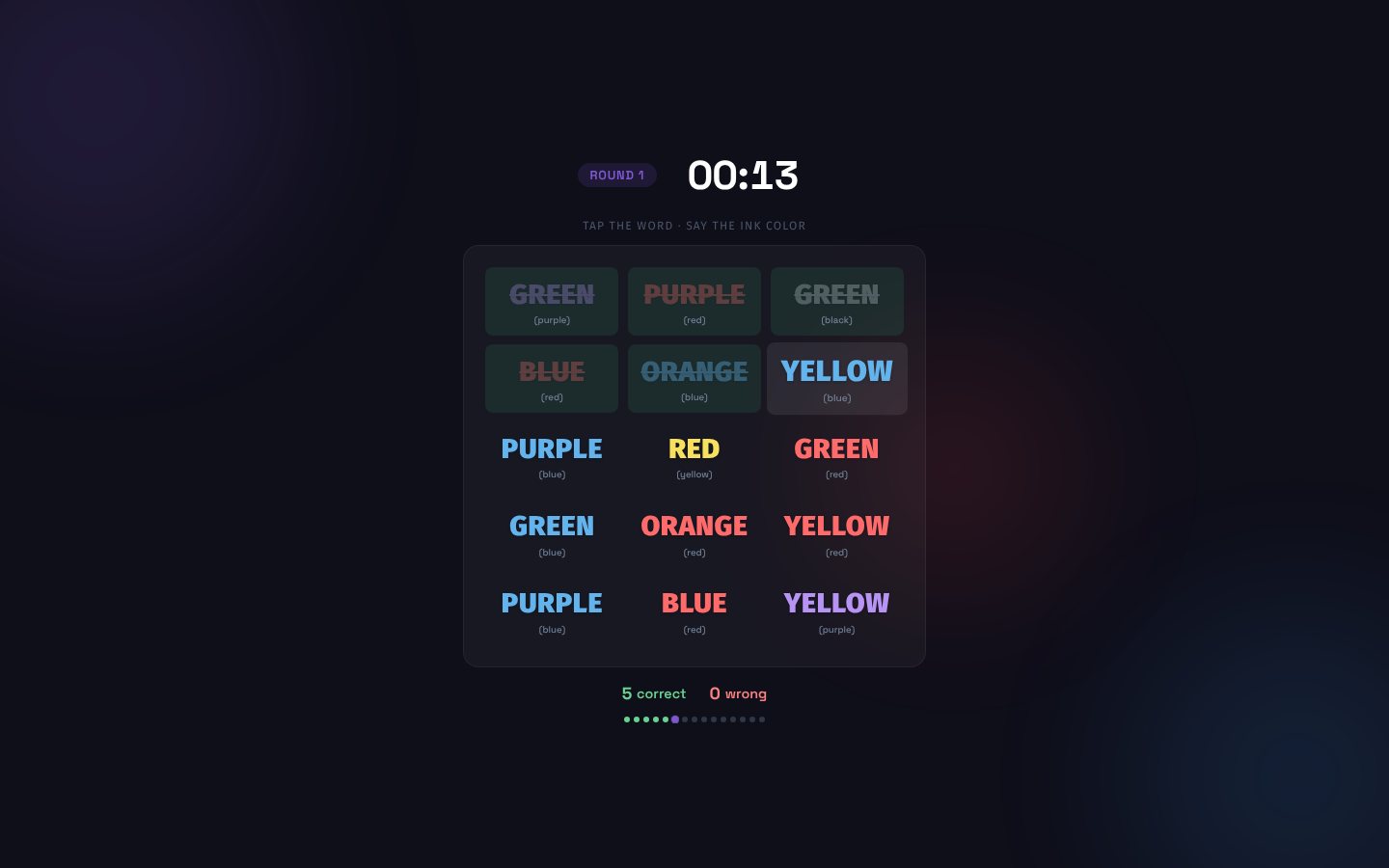
    Ticks the colorblind option
    It answers
    Prints the ink color in small type under every word
    The same grid with the ink color named in brackets beneath each word
  5. 05 / 05

    Beat the clock

    You
    Keeps going as time runs out
    It answers
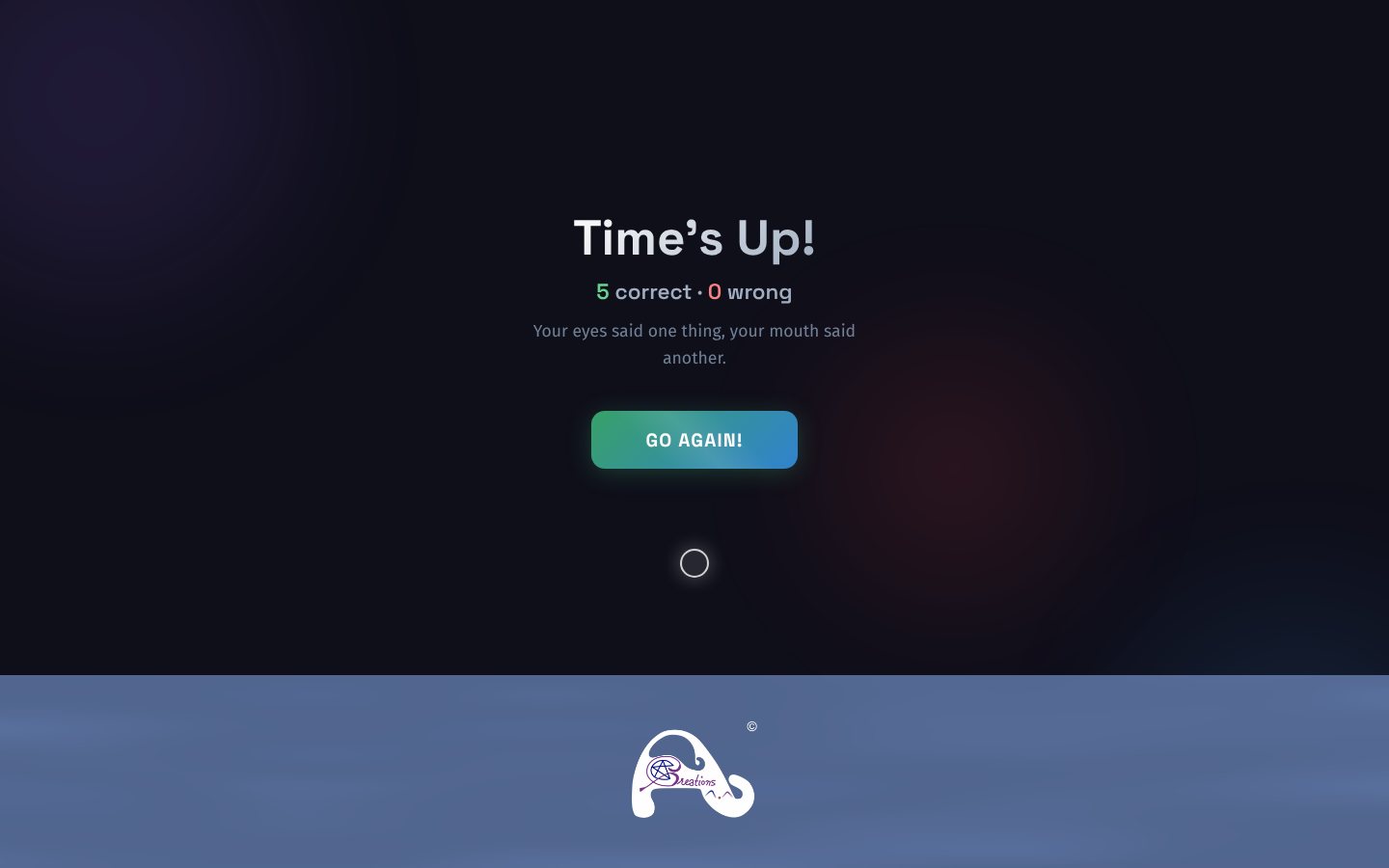
    Warns in orange at 10 seconds and red at 5, then shows the score
    A Time’s Up screen with the score and a Go Again button

03 · What was special

What it stands on

  1. No rules to explain

    One sentence on the landing page is the whole briefing. Everyone gets it at once.

  2. Built for a phone and a crowd

    One file, works offline after the first load, and responds from 320 pixels up.

  3. A colorblind mode

    Small labels name the ink color under each word, so the game does not depend on telling hues apart.

Your own brain is the opponent.

Making-Of

Everyone gets it at once, and everyone struggles just as fast.

A recorded voice note describing the game, the same day as the first commit

  1. The world before

    Party games usually need a download, an account, or a page of rules.

  2. One day

    30 January 2026. A voice note: recreate a Stroop-effect game seen on a museum’s Instagram post, in the spirit of the play philosophy from design school, simple enough for any phone.

  3. Because of that

    1. 30 January 2026. A written plan settled the open choices: timers of 15, 30 and 60 seconds, a 5 by 3 grid, no audio, a colorblind mode.
    2. 30 January 2026. Version 1.0 committed: landing, game and game-over screens in one file.
    3. 30 January 2026. A README added to explain how to play.
  4. Until finally

    The game is launched: timed rounds, tap-to-mark scoring, keyboard shortcuts, and a footer carrying the studio mark.

  5. Since then

    The repository has had no commits since the first day.

The evidence Process, hands, and artifacts

Process

  1. Origin

    Recreate a museum’s Stroop post as a browser game

  2. Plan

    Written plan: three timers, 15-word grid, strict color mismatch, colorblind labels

  3. Build

    Version 1.0 as a single HTML file, mobile first

  4. Docs

    README with how to play, shortcuts and file layout

Hands

Akshansh

  • The concept, recorded as a voice note
  • The play philosophy and the choice of a simple, instant format

Agents

  • Claude CodePlanned and built the game